
Machine vs. Traditional: Stretch Film Cost Efficiency
Source:Machine vs. Traditional: Stretch Film Cost EfficiencyTime:2025-12-05Visitors:
Comparing machine stretch film to traditional (handy) stretch film reveals that machine film offers superior cost efficiency through significant material savings via pre-stretch, reduced labor costs from automation, and minimized product damage due to enhanced load stability, leading to a lower total cost of ownership per wrapped pallet.
In the competitive landscape of modern business, every operational cost is scrutinized. Packaging, often seen as a necessary expense, holds significant potential for efficiency gains and cost reductions. When it comes to stretch film, the choice between machine application and traditional manual methods isn't just about convenience; it's a critical decision impacting your bottom line. Understanding the true cost efficiency of each approach requires looking beyond the initial price per roll and delving into factors like material utilization, labor, and product protection. Let's explore how machine stretch film consistently outperforms traditional methods in terms of overall cost efficiency.
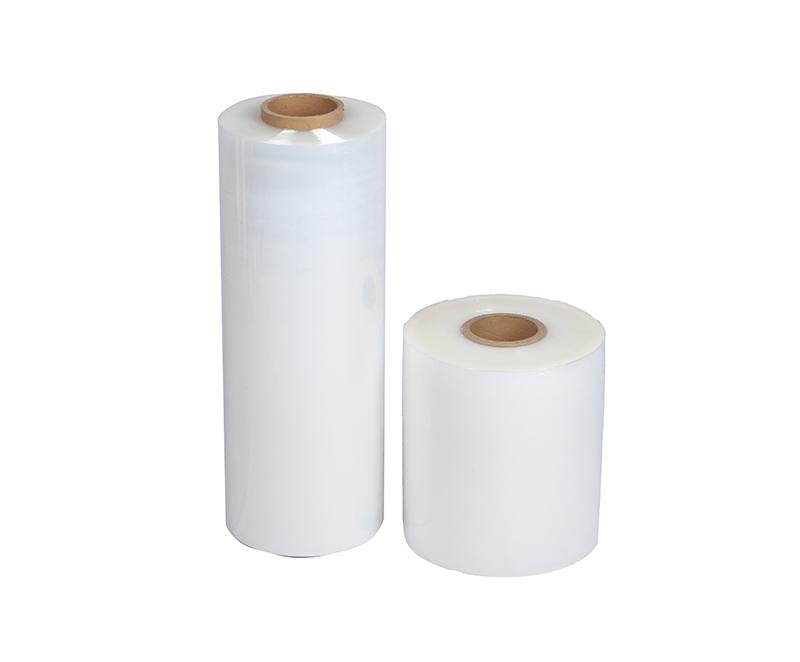
Table of Contents
- What is the Initial Material Cost Comparison?
- How Does Pre-Stretch Technology Impact Film Consumption?
- What Are the Labor Cost Differences Between Machine and Traditional Wrapping?
- How Does Load Stability Affect Damage Costs?
- What Are the Equipment and Maintenance Costs for Each Method?
- How Do Speed and Throughput Influence Overall Cost Efficiency?
- What is the Total Cost of Ownership (TCO) for Each Method?
1. What is the Initial Material Cost Comparison?
Are you only looking at the price per roll? The initial material cost per roll for machine stretch film is often higher than for traditional (handy) stretch film due to its specialized engineering for high tensile strength and pre-stretch capabilities, but this higher per-roll cost is offset by its superior yield and efficiency.
1.1 Price Per Roll vs. Price Per Foot
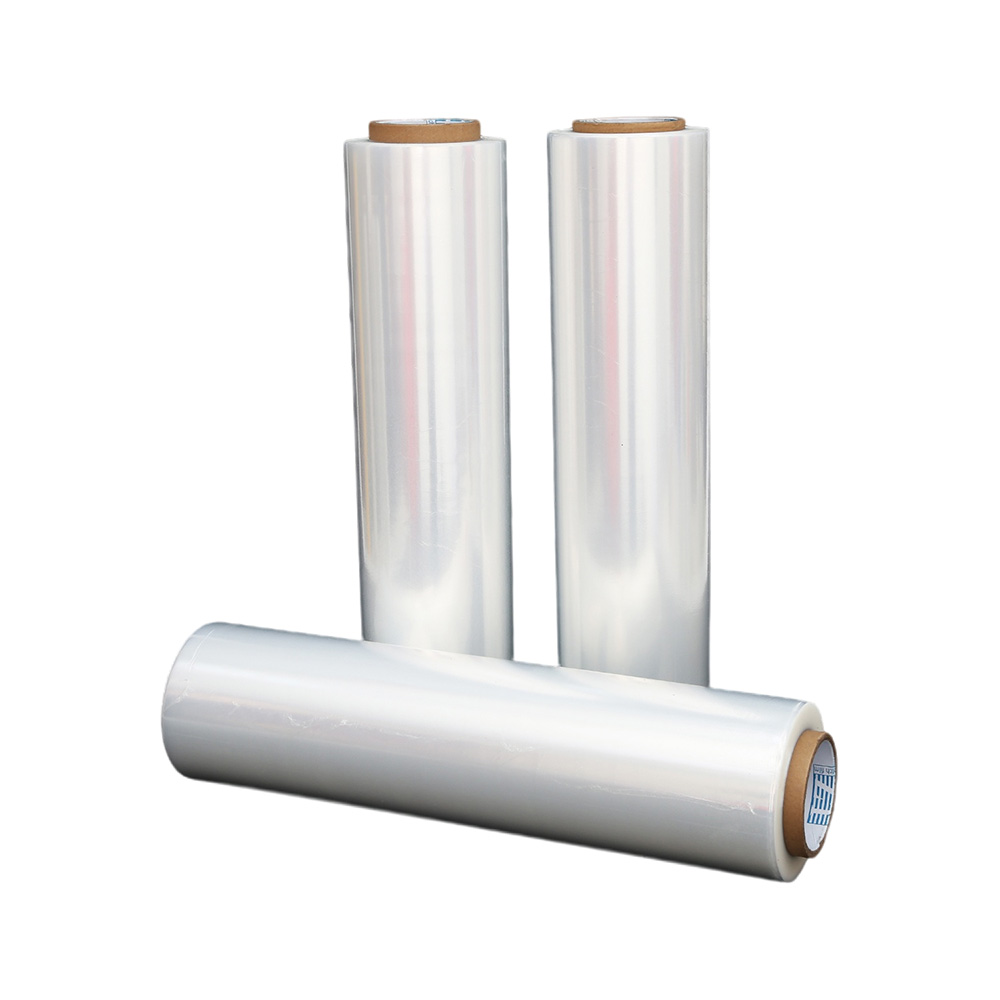
When comparing the raw material cost, it's easy to be misled by the price per roll. Machine stretch film rolls are typically larger, heavier, and contain significantly more film (e.g., 1500-2000 meters) than handy film rolls (e.g., 300-500 meters). While the absolute price of a machine film roll might be higher, the true comparison should be based on the price per foot or, more accurately, the cost per wrapped pallet. The specialized polymers and manufacturing processes required for machine film's high performance contribute to its higher unit cost. Dongguan Zhiteng Plastic Products Co., Ltd. produces both "machine stretch film" and "handy stretch film," acknowledging the different material requirements for each.
-
Example 1: Roll Price Disparity: A 1500-meter roll of machine film might cost 50,whilea300−meterrollofhandyfilmcosts50, while a 300-meter roll of handy film costs 50,whilea300−meterrollofhandyfilmcosts15. On a per-roll basis, the machine film is more expensive. However, as we'll see, the machine film will wrap many more pallets.
-
Example 2: Film Gauge: Machine films are often available in thinner gauges (e.g., 15-micron) that, due to pre-stretch, can outperform thicker handy films (e.g., 23-micron) in containment force, further complicating a simple per-roll comparison.
1.2 Impact of Film Specifications
The specifications of the film itself play a crucial role in its initial cost. Machine films are engineered for specific performance characteristics like high puncture resistance, superior cling, and consistent gauge, which can influence their price. Handy films, while also having varying qualities, generally have less stringent requirements as they are not subjected to the same mechanical stresses.
-
Example 1: High-Performance Machine Film: A premium machine film designed for extreme pre-stretch and heavy loads will naturally have a higher per-roll cost than a standard machine film.
-
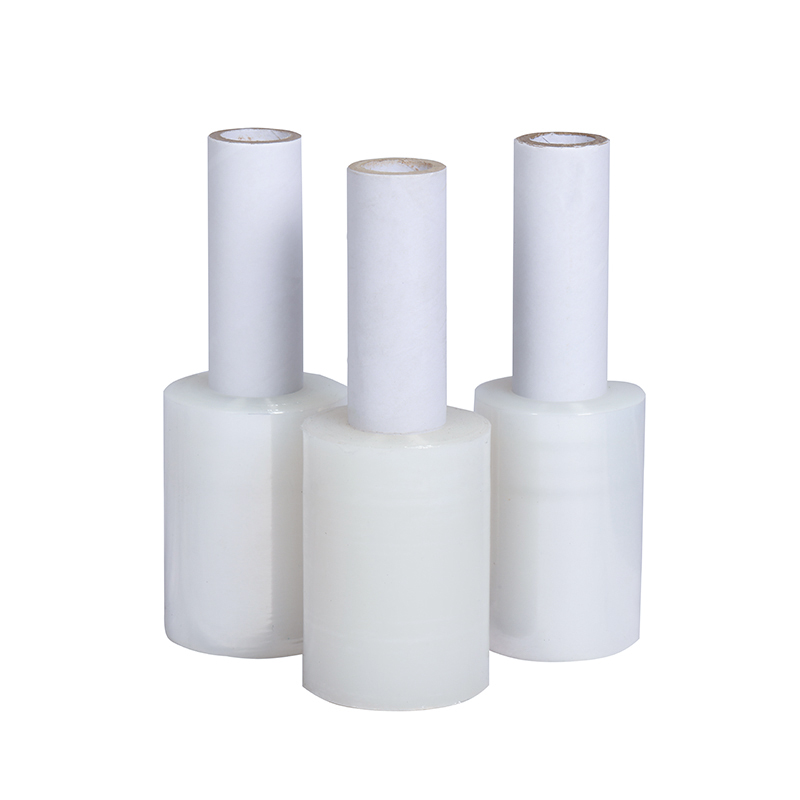
Example 2: Basic Handy Film: A basic handy film for light bundling will be among the cheapest options, but its performance limitations mean it's not suitable for pallet wrapping. Zhiteng's diverse product line, including "bundling stretch film" and "pre-stretched film," caters to these varied needs.
Practical advice for initial material cost comparison is to always request specifications like film length, gauge, and guaranteed pre-stretch percentage, then calculate the cost per meter or per expected wrapped pallet, rather than just the roll price.
2. How Does Pre-Stretch Technology Impact Film Consumption?
Are you looking for the biggest factor in material savings? Pre-stretch technology, exclusive to machine stretch wrappers, drastically impacts film consumption by stretching the film up to 300% or more before application, meaning significantly less film is used per pallet compared to traditional manual wrapping, which offers minimal pre-stretch.
2.1 The Power of Pre-Stretch
Pre-stretch is the process where a stretch wrapper's carriage elongates the film between two rollers before it is applied to the load. This mechanical stretching can increase the film's length by 200%, 250%, or even 300% or more. This means that 1 meter of film from the roll can become 3 or 4 meters of film on the pallet. Traditional manual wrapping, by contrast, relies on the operator's physical strength, achieving only minimal stretch (typically 10-50%) and often inconsistently.
-
Example 1: 250% Pre-Stretch: If a pallet requires 100 feet of film to be securely wrapped, a machine with 250% pre-stretch would only consume 28.5 feet of film from the roll (100 / 3.5 = 28.5). A manual wrapper might use 80 feet of film from the roll for the same containment.
-
Example 2: Film Gauge Reduction: Because pre-stretched film is stronger and more efficient, businesses can often switch to a thinner gauge machine film (e.g., from 23-micron handy film to 15-micron machine film) while maintaining or even improving load containment, further reducing material costs.
2.2 Consistent Application and Reduced Waste
Beyond the sheer stretching power, machine wrappers apply film with consistent tension and overlap, ensuring that every inch of film contributes effectively to load containment. This consistency minimizes wasted film due to over-wrapping, inconsistent tension (which can lead to film breakage or inadequate containment), or uneven application.
-
Example 1: Eliminating Over-Wrapping: A machine can be programmed to apply the exact number of wraps needed, avoiding the common manual tendency to over-wrap "just to be safe," which wastes film.
-
Example 2: Reduced Breakage: Machine film is designed to withstand high pre-stretch without breaking, minimizing film waste from snapped rolls during application, a common issue with manual wrapping if the film is stretched too aggressively. Zhiteng's "pre-stretched film" is specifically engineered for this efficiency.
Practical advice for maximizing pre-stretch benefits includes regularly calibrating your stretch wrapper's pre-stretch system and using high-quality machine film that is guaranteed to perform at your desired pre-stretch percentage.
3. What Are the Labor Cost Differences Between Machine and Traditional Wrapping?
Are you looking to reduce your labor expenses? Machine stretch film significantly reduces labor costs by automating the wrapping process, requiring minimal operator intervention compared to the dedicated manual labor needed for traditional hand wrapping, freeing up personnel for higher-value tasks.
3.1 Direct Labor Time Savings
The most obvious labor cost difference is the direct time spent wrapping. A manual operator can take 2-5 minutes to wrap a single pallet, depending on the load and their skill level. A semi-automatic stretch wrapper can wrap a pallet in 30-60 seconds, requiring the operator only to attach the film and press a button. Fully automatic systems require no operator intervention at all.
-
Example 1: High-Volume Operation: A warehouse wrapping 100 pallets per day would spend 200-500 minutes (3.3-8.3 hours) on manual wrapping. With a semi-automatic machine, this drops to 50-100 minutes (0.8-1.6 hours), freeing up significant labor time.
-
Example 2: Reallocation of Staff: The time saved can be reallocated to more productive tasks like order picking, inventory management, or quality control, directly impacting overall operational efficiency.
3.2 Indirect Labor Benefits and Safety
Beyond direct time savings, machine wrapping offers indirect labor benefits. It reduces operator fatigue and the risk of repetitive strain injuries (like back strain from bending and walking around pallets), leading to fewer worker's compensation claims and improved employee morale. The consistent process also reduces the need for extensive training on proper wrapping techniques.
-
Example 1: Reduced Worker's Comp Claims: A company experiencing frequent back injuries from manual wrapping sees a reduction in claims after implementing stretch wrappers.
-
Example 2: Improved Morale: Employees appreciate being freed from a physically demanding and monotonous task, allowing them to focus on more engaging work. Zhiteng's commitment to "quality, service, and environmental protection" implicitly includes worker safety.
Practical advice for assessing labor costs is to conduct a time study of your current manual wrapping process and calculate the hourly cost of the labor involved. This will provide a clear baseline for comparison with machine wrapping.
4. How Does Load Stability Affect Damage Costs?
Are you experiencing product damage during transit? Machine stretch film significantly reduces product damage costs by providing superior and consistent load stability, minimizing shifting and movement within the pallet, which is a common cause of damage with less secure traditional wrapping.
4.1 Enhanced Containment Force and Uniformity
Machine wrappers apply a high, consistent containment force across the entire pallet, compressing the load into a single, stable unit. This uniform tension and overlap prevent individual boxes or items from shifting, leaning, or falling during handling, transportation, and storage. Traditional manual wrapping often results in inconsistent tension and coverage, creating weak spots where loads can fail.
-
Example 1: Fragile Goods: A company shipping glass bottles or ceramic items sees a dramatic reduction in breakage rates after switching to machine wrapping, as the consistent containment prevents impacts between items.
-
Example 2: Tall, Unstable Loads: For pallets with tall or inherently unstable loads, machine wrapping provides the necessary compressive force to keep them upright and secure, preventing costly tip-overs.
4.2 Protection from External Factors
Beyond internal load stability, the consistent and tight wrap from a machine provides a more effective barrier against external factors like dust, dirt, and moisture. This added protection further reduces the risk of product damage or spoilage, especially for goods stored in warehouses or transported in varying environmental conditions.
-
Example 1: Moisture-Sensitive Products: Electronics or paper products are better protected from humidity and rain during transit with a uniformly machine-wrapped pallet. Zhiteng's film is "moisture-proof, dust-proof."
-
Example 2: Abrasions and Scratches: The continuous film barrier protects products from minor abrasions and scratches that can occur during handling or contact with other freight.
Practical advice for assessing damage costs is to track your current damage rates, including the cost of damaged goods, returns, reshipping, and customer service. This data will highlight the potential savings from improved load stability.
5. What Are the Equipment and Maintenance Costs for Each Method?
Are you considering the long-term investment? Traditional wrapping has virtually no equipment cost, relying only on film. Machine wrapping requires an initial investment in a stretch wrapper (semi-automatic or automatic) and ongoing maintenance, but these costs are typically offset by significant labor and material savings over time.
5.1 Initial Equipment Investment
The most significant difference in cost structure lies in the initial equipment investment. For traditional wrapping, the equipment cost is essentially zero, perhaps a few dollars for a hand dispenser. For machine wrapping, the cost can range from a few thousand dollars for a basic semi-automatic wrapper to tens or hundreds of thousands for a fully automatic, integrated system.
-
Example 1: Small Business Startup: A new small business with very low pallet volume might opt for traditional wrapping to avoid any capital expenditure.
-
Example 2: Growing Manufacturer: A manufacturer with increasing pallet volume would invest in a semi-automatic wrapper, recognizing the long-term savings despite the upfront cost.
5.2 Ongoing Maintenance and Energy
Once purchased, a stretch wrapper will incur ongoing costs for electricity (to operate the machine) and periodic maintenance (preventative checks, replacement parts like rollers or belts). While these are additional costs not present with traditional wrapping, they are generally predictable and manageable.
-
Example 1: Preventative Maintenance: Regular lubrication and inspection of a stretch wrapper's moving parts can prevent costly breakdowns and extend its lifespan.
-
Example 2: Energy Consumption: A typical semi-automatic wrapper uses minimal electricity, often comparable to a small appliance, making the energy cost a minor factor compared to labor and material savings.
Practical advice for equipment costs is to research different wrapper models, consider your current and projected pallet volume, and factor in potential financing options. Always ask about warranty and service plans.
6. How Do Speed and Throughput Influence Overall Cost Efficiency?
Are you looking to maximize your operational output? Machine stretch film dramatically boosts speed and throughput, directly influencing overall cost efficiency by allowing more pallets to be wrapped in less time, reducing bottlenecks, and optimizing the flow of goods through your facility.
6.1 Increased Pallet Output
The sheer speed of machine wrapping means a significantly higher number of pallets can be processed per hour compared to manual methods. This increased output directly translates to greater efficiency in your shipping department or warehouse.
-
Example 1: Meeting Peak Demand: During busy seasons or for large orders, machine wrapping allows a company to meet high demand without falling behind, avoiding costly delays or expedited shipping fees.
-
Example 2: Reduced Bottlenecks: If pallet wrapping is a bottleneck in your operation, a machine wrapper can alleviate this, ensuring a smoother, faster flow of goods from production to dispatch.
6.2 Optimized Workflow and Space Utilization
Faster wrapping speeds contribute to a more optimized workflow throughout your facility. Less time spent wrapping means less staging area required for pallets awaiting wrapping, freeing up valuable floor space. It also allows for more efficient loading of trucks and containers, reducing turnaround times.
-
Example 1: Faster Truck Loading: Trucks can be loaded more quickly as pallets are wrapped and ready, reducing driver wait times and improving overall logistics efficiency.
-
Example 2: Leaner Operations: By streamlining the packaging process, businesses can adopt leaner operational practices, reducing waste in time, motion, and space. Zhiteng's participation in events like the "2025 Guangzhou Packaging Expo" indicates their engagement with industry trends towards greater efficiency.
Practical advice for evaluating speed and throughput is to calculate your current average wrapping time per pallet and multiply it by your daily or weekly pallet volume. Compare this to the potential output of various machine wrapper models.
7. What is the Total Cost of Ownership (TCO) for Each Method?
Are you looking at the complete financial picture? The Total Cost of Ownership (TCO) for machine stretch film, despite higher initial equipment costs, is significantly lower than traditional wrapping due to substantial savings in labor and material, reduced product damage, and increased operational efficiency over the lifespan of the equipment.
7.1 Comprehensive Cost Analysis
TCO considers all costs associated with a product or system over its entire lifespan. For stretch film, this includes:
-
Material Costs: Film purchase, including pre-stretch benefits.
-
Labor Costs: Direct wrapping time, indirect benefits (reduced injuries, reallocation).
-
Equipment Costs: Initial purchase, installation, maintenance, energy, depreciation.
-
Damage Costs: Product damage, returns, claims, reshipping.
-
Efficiency Costs: Bottlenecks, lost throughput, missed deadlines.
When all these factors are aggregated, machine stretch film almost invariably presents a lower TCO for any operation with moderate to high pallet volumes.
-
Example 1: 3-Year TCO for 50 Pallets/Day:
-
Traditional: High labor (X),highmaterial(X), high material (X),highmaterial(Y), moderate damage (Z).Total=Z). Total = Z).Total=X+Y+Z.
-
Machine: Moderate equipment (A),lowlabor(A), low labor (A),lowlabor(B), low material (C),lowdamage(C), low damage (C),lowdamage(D). Total = $A+B+C+D.
-
Typically, A+B+C+D<<A+B+C+D << A+B+C+D<<X+Y+Z over 3 years.
-
-
Example 2: Break-Even Point: Many businesses find that a stretch wrapper pays for itself in labor and material savings within 12-24 months, after which it generates pure cost savings.
7.2 Long-Term Strategic Investment
Choosing machine stretch film and a wrapper is a long-term strategic investment in operational efficiency and cost reduction. It's not just about saving money today, but about building a more robust, productive, and cost-effective packaging operation for the future. This aligns with Zhiteng's mission to "combine professional capabilities with customer needs to help customers manufacture the most suitable products."
-
Example 1: Scalability: As a business grows, machine wrapping systems can easily scale to meet increased demand, whereas manual wrapping quickly becomes unsustainable.
-
Example 2: Competitive Advantage: Lower packaging costs and more reliable product delivery can provide a significant competitive advantage in the marketplace.
Practical advice for TCO analysis is to create a detailed spreadsheet that accounts for all the cost factors mentioned above over a 3-5 year period. This comprehensive view will clearly demonstrate the financial benefits of machine stretch film.
Conclusion
While traditional (handy) stretch film offers a low initial entry point with virtually no equipment costs, its long-term cost efficiency is significantly outmatched by machine stretch film for any operation with moderate to high pallet volumes. Machine film, despite a higher per-roll price and the initial investment in a stretch wrapper, delivers substantial savings through its pre-stretch technology, drastically reducing film consumption per pallet. Furthermore, the automation of machine wrapping slashes labor costs, minimizes product damage through superior load stability, and dramatically increases speed and throughput. When considering the Total Cost of Ownership, machine stretch film emerges as the clear winner, providing a more cost-effective, efficient, and reliable packaging solution that optimizes your supply chain and contributes directly to your bottom line.
Recommended Products
Ranked in the same article
- how to use the stretch film technology to r
- How can we get detailed price list?
- Gauge to Micron and Millimetre Conversion G
- Five common quality problems of PE protecti
- Plastic film degradation
- How to guarantee punctual shipment for our
- What is the difference between stretch film
- Testing the permeability of stretch film
- Stretch film temperature requirements
- 2025 Guangzhou Packaging Expo Opens, Zhiten
- Electrical wire film VS electrostatic film
Latest news articles
- Our services
- What effects can different colours of Color
- Why does stretch film wrinkle when it is us
- What Role Does Material Science Play in Enh
- Unraveling the Science: What Factors Influe
- How to identify high quality flexible stret
- Bundling Stretch Film: The Ultimate Guide f
- The Ultimate Guide to Hand Stretch Film: Ev
- how to use the stretch film technology to r
- SWOP - SHANGHAI WORLD OF PACKAGING 2019
- What is Bundling Stretch Film? Your Packagi