
Choosing the Right Dispenser for Bundling Stretch Film
Source:Choosing the Right Dispenser for Bundling Stretch FilmTime:2026-01-30Visitors:
Bundling small items with stretch film can be inefficient or uncomfortable without the right tool. Poor dispensers lead to wasted film, operator fatigue, and inconsistent wraps. Choosing the correct dispenser for bundling stretch film is crucial for optimizing efficiency, ensuring consistent wrap quality, reducing operator strain, and minimizing film waste in small parts kitting and other bundling applications.
The effectiveness of bundling stretch film, a vital component in kitting and packaging small items, hinges significantly on the tool used to apply it. An often-overlooked piece of equipment, the dispenser, acts as the critical interface between the film and the product. Its design and functionality directly impact not only the quality of the wrap but also the productivity, comfort, and safety of the operator. Selecting the right dispenser is therefore not just a matter of convenience, but a strategic decision that can profoundly influence operational flow, material costs, and overall efficiency in any bundling operation.
Table of Contents
- Why is the Right Dispenser Crucial for Bundling Stretch Film?
- What Types of Dispensers Are Available for Bundling Stretch Film?
- What Factors Should You Consider When Choosing a Bundling Film Dispenser?
- How Does Dispenser Ergonomics Impact Operator Efficiency and Safety?
- How Do Different Dispenser Features Affect Film Application and Waste?
1. Why is the Right Dispenser Crucial for Bundling Stretch Film?
Even the best bundling film can underperform if paired with the wrong dispenser. This section explores why selecting the appropriate tool is as important as the film itself for effective bundling.
The right dispenser for bundling stretch film is crucial because it ensures consistent film tension, reduces operator fatigue, prevents film waste, and improves overall efficiency and wrap quality, directly impacting productivity and cost-effectiveness in bundling operations.
1.1 Impact on Wrap Quality and Consistency
Manual wrapping without a dedicated dispenser often results in inconsistent film tension, leading to wraps that are either too loose to secure items or too tight, causing film breakage and wasted material. A well-designed dispenser provides controlled tension, allowing for a uniform and secure wrap every time. This consistency is vital for maintaining the integrity of bundled items, preventing them from shifting, falling out, or becoming damaged during handling and transit. For operations relying on precise kitting, consistent wrap quality ensures that all components remain together as intended.
- Example 1: Bundling Electrical Wires: Inconsistent tension can lead to wires loosening or tangling, making them difficult to use in assembly. A dispenser ensures a tight, uniform wrap that keeps the wires neatly bundled and organized.
- Example 2: Kitting Small Hardware: Loose wraps mean tiny parts like screws, washers, or nuts can easily fall out of the bundle, leading to incomplete kits and assembly delays. A consistent wrap from a proper dispenser keeps all components securely contained.
Practical advice for maximizing wrap quality is to regularly check and adjust the dispenser's tension settings, if available, to match the specific film and product being bundled. This ensures optimal stretch and containment without film breakage. Dongguan Zhiteng Plastic Products Co., Ltd.'s bundling stretch film performs best when applied with consistent tension, maximizing its excellent tensile strength and high rebound force.
1.2 Influence on Operator Productivity and Comfort
The physical act of manually wrapping items, especially repeatedly throughout a shift, can be strenuous. Without an ergonomic dispenser, operators may experience strain on their wrists, hands, and back due to awkward postures, repetitive motions, and the effort required to maintain film tension. This physical discomfort leads to fatigue, reduced productivity, and an increased risk of repetitive strain injuries (RSIs). A well-designed dispenser minimizes physical effort, allowing operators to work more comfortably, faster, and for longer periods without undue strain, directly boosting overall productivity and morale.
- Example 1: High-Volume Kitting: Operators wrapping hundreds of small component bundles per shift will quickly experience hand and wrist fatigue without an ergonomic dispenser, leading to slower output and potential errors.
- Example 2: Repetitive Tasks: In assembly lines where bundling is a constant activity, dispensers designed for comfort prevent the onset of conditions like carpal tunnel syndrome, ensuring a healthier and more productive workforce.
Ergonomic features to look for include lightweight construction, comfortable non-slip grips, balanced weight distribution, and mechanisms that reduce the need for manual tensioning. Practical advice is to conduct a trial period with different dispenser models, involving the actual operators, to assess comfort and ease of use under real-world conditions. Their feedback is invaluable for choosing a dispenser that enhances, rather than hinders, productivity.
2. What Types of Dispensers Are Available for Bundling Stretch Film?
From simple handheld tools to more advanced semi-automatic systems, a variety of dispensers exist for bundling stretch film. Understanding these types is the first step in making an informed choice for your specific needs.
Dispensers for bundling stretch film primarily include handheld manual dispensers for portability and low-volume tasks, and semi-automatic or fully automatic bundling machines for high-volume, consistent applications, each offering distinct advantages in terms of speed, control, and investment.
2.1 Manual Handheld Dispensers
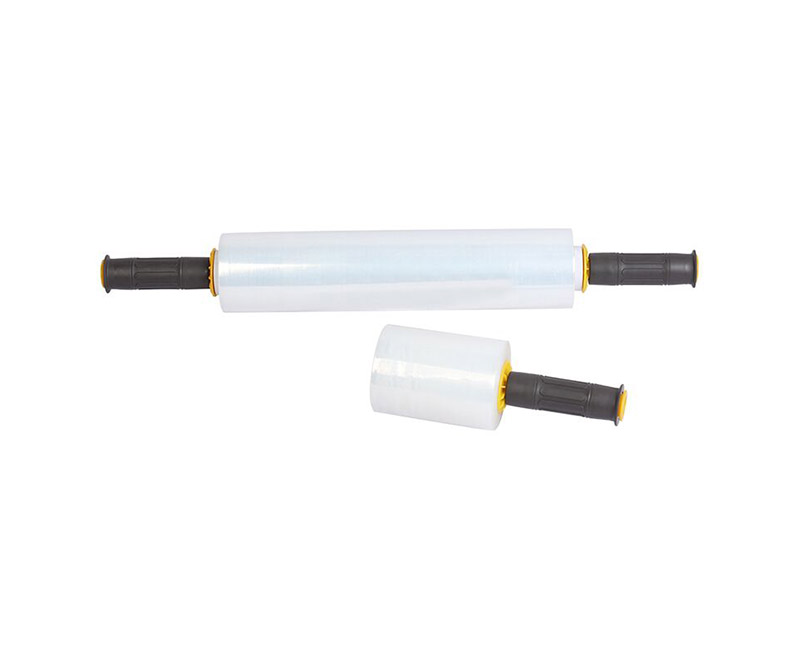
Manual handheld dispensers are the most common type for bundling stretch film, particularly for low-volume applications, varied tasks, or situations requiring portability. These dispensers are typically lightweight, inexpensive, and easy to use. They consist of a handle and a mechanism to hold the film roll, often with a simple brake or friction device to provide some tension control. While the tension is largely operator-controlled, even basic models offer more consistency and comfort than wrapping directly by hand. They are ideal for small businesses, individual workstations, or mobile applications where a power source is not readily available.
- Example 1: Small Retail Operations: A small boutique bundling gift items or product sets for display can efficiently use a handheld dispenser for a neat, professional finish.
- Example 2: Field Service Technicians: Technicians working on-site might use a portable handheld dispenser to bundle cables, tools, or components after repairs, ensuring organization and preventing loss.
Practical advice for manual dispensers is to choose models with comfortable, non-slip grips and a simple, effective tensioning mechanism (like a thumb brake or adjustable resistance knob) to reduce operator strain and improve wrap quality.
2.2 Semi-Automatic Bundling Machines
Semi-automatic bundling machines represent a significant step up in terms of speed, consistency, and efficiency, making them suitable for medium to high-volume kitting and bundling operations. With these machines, the operator typically places the item to be bundled onto a platform or within a wrapping ring, and the machine then automatically applies the stretch film with consistent tension and overlap. This automation drastically reduces labor time, minimizes operator fatigue, and ensures a uniform wrap every time. While they require a higher initial investment and a dedicated workspace, the long-term benefits in productivity and material savings are substantial for busy operations.
- Example 1: Manufacturing Lines: An electronics manufacturer kitting hundreds of component sets per shift for assembly workstations would benefit immensely from a semi-automatic machine to ensure consistent, fast bundling.
- Example 2: Warehouse Operations: A distribution center bundling small packages or product groups for shipment can use these machines to quickly prepare loads, preventing bottlenecks and ensuring secure transit.
Features of semi-automatic machines often include:
- Adjustable tension control for different film types and products.
- Variable speed settings for wrapping.
- Foot pedal or push-button operation for hands-free control.
- Programmable wrap patterns (e.g., number of rotations).
- Compatibility with various film widths and gauges.
Practical advice for semi-automatic machines is to consider your current and projected throughput requirements. Evaluate how easily the machine can be integrated into your existing production or packing line to maximize its efficiency benefits.
3. What Factors Should You Consider When Choosing a Bundling Film Dispenser?
Selecting the ideal dispenser involves weighing several critical factors beyond just cost. This section guides you through the key considerations to ensure your choice aligns perfectly with your operational demands.
When choosing a bundling film dispenser, consider your daily bundling volume, the size and weight of items, required film width and gauge, operator ergonomics, budget, and the desired level of automation to match the dispenser to your specific operational needs and maximize efficiency.
3.1 Volume and Throughput Requirements
The volume of items you need to bundle daily or per shift is arguably the most critical factor in dispenser selection. It directly dictates the required speed and level of automation. Over-investing in an automated system for low volume is inefficient, just as relying on manual methods for high volume will lead to bottlenecks and increased labor costs. Accurately assessing your current and projected throughput will guide you toward the most cost-effective and efficient solution.
- Example 1: A small craft business bundling 20 custom kits a day for online orders would find a simple manual handheld dispenser perfectly sufficient and cost-effective.
- Example 2: An automotive parts supplier kitting 500 small component sets per shift for various vehicle models would require a semi-automatic bundling machine to maintain efficiency and consistency.
Practical advice is to calculate your current average daily and peak bundling volume. Consider future growth projections to ensure your chosen dispenser can scale with your business needs.
3.2 Film Specifications and Item Characteristics
Dispensers are designed to work with specific film widths and core sizes. It's essential to match the dispenser to the bundling film you intend to use. Furthermore, the physical characteristics of the items being bundled – their size, shape, weight, and fragility – will influence the type of dispenser needed. A dispenser suitable for bundling small, uniform items might not be effective for larger, irregularly shaped, or delicate components. The film's gauge (thickness) also plays a role, as some dispensers are better suited for thinner or thicker films.
- Example 1: Bundling very small, delicate items like jewelry components or miniature electronic parts requires a dispenser that can handle very narrow film (e.g., 2-inch wide) and apply gentle, consistent tension without damaging the items.
- Example 2: Bundling heavier, irregular-shaped items like small metal castings or plumbing fittings needs a robust dispenser that can maintain strong tension with a thicker gauge film without breaking, ensuring the bundle remains secure.
Key film and item characteristics to match:
- Film Width: Ensure the dispenser accommodates your desired film width (e.g., 2-inch, 3-inch, 5-inch).
- Film Core Size: Dispensers are built for specific core diameters (e.g., 1-inch, 2-inch, 3-inch).
- Film Gauge: Consider if the dispenser's tension mechanism is suitable for very thin or thick films.
- Item Size/Shape: The dispenser should allow easy positioning and wrapping around the items.
- Item Fragility: Delicate items require precise tension control to prevent damage.
Practical advice is to always verify dispenser compatibility with your chosen film's width, gauge, and core diameter before purchase. Dongguan Zhiteng Plastic Products Co., Ltd. offers various narrow-width stretch film and pre-stretched film options, and selecting a compatible dispenser will ensure optimal performance from these products.
4. How Does Dispenser Ergonomics Impact Operator Efficiency and Safety?
The physical comfort and safety of your operators are paramount, directly influencing productivity and preventing costly injuries. This section delves into how dispenser ergonomics play a vital role in achieving these goals.
Dispenser ergonomics significantly impact operator efficiency and safety by reducing physical strain, preventing repetitive motion injuries, and improving comfort, leading to faster, more consistent bundling, fewer errors, and a healthier workforce, ultimately boosting overall productivity and morale.
4.1 Reducing Operator Fatigue and Strain
Poorly designed dispensers can force operators into awkward postures, require excessive gripping force, or involve repetitive wrist movements that lead to fatigue and discomfort over time. This strain not only slows down the bundling process but also increases the likelihood of errors. Ergonomic dispenser designs, however, prioritize natural body movements and minimize physical effort. Features like lightweight construction, comfortable non-slip grips, and balanced weight distribution reduce the burden on operators, allowing them to work longer, more efficiently, and with greater focus without experiencing undue fatigue.
- Example 1: Lightweight Design: A dispenser made from lightweight materials with a comfortable, non-slip grip significantly reduces hand and arm fatigue, especially during extended periods of use in a busy kitting department.
- Example 2: Built-in Tension Control: A dispenser with a built-in brake or adjustable tension control eliminates the need for operators to manually apply resistance to the film roll, saving wrist and shoulder strain. This is particularly beneficial when using films with high inherent stretch, like pre-stretched film.
Practical advice is to involve your operators in the dispenser selection process. Their direct feedback on comfort, grip, and ease of use during a trial period can be invaluable in choosing a dispenser that genuinely enhances their work experience and productivity.
4.2 Preventing Repetitive Strain Injuries (RSIs)
Repetitive tasks, especially when performed with non-ergonomic tools, are a leading cause of Repetitive Strain Injuries (RSIs) such as carpal tunnel syndrome, tendonitis, and epicondylitis. These injuries can lead to chronic pain, lost workdays, increased healthcare costs, and a significant drop in employee morale and retention. Dispensers designed with ergonomics in mind actively work to prevent these injuries by minimizing awkward postures, reducing the force required for operation, and promoting neutral joint positions. Investing in ergonomic dispensers is not just about comfort; it's a proactive step towards creating a safer, healthier, and more sustainable workforce.
- Example 1: Neutral Wrist Position: A dispenser designed to allow the operator to maintain a neutral wrist position during wrapping significantly reduces the risk of carpal tunnel syndrome compared to models that force the wrist into bent or twisted positions.
- Example 2: Semi-Automatic Solutions: For very high-volume tasks, transitioning to a semi-automatic bundling machine eliminates manual wrapping altogether, thereby removing the primary source of repetitive strain for operators involved in bundling.
Warning signs of RSIs include persistent pain, numbness, tingling, swelling, or stiffness in the hands, wrists, arms, or shoulders. Good ergonomic design counteracts these by:
- Minimizing gripping force required.
- Reducing the number of repetitive motions.
- Allowing for frequent changes in posture.
- Providing support for limbs.
Practical advice is to not only invest in ergonomic equipment but also to provide training on proper body mechanics and stretching exercises. Regularly review your bundling processes for any potential ergonomic hazards and address them promptly to maintain a healthy and productive environment.
5. How Do Different Dispenser Features Affect Film Application and Waste?
Beyond basic functionality, specific features of a bundling film dispenser can profoundly influence how effectively film is applied and how much material is wasted. Understanding these features is key to optimizing your packaging process.
Dispenser features like adjustable tension control, braking mechanisms, and film core compatibility directly affect film application by ensuring consistent, secure wraps, while also minimizing waste by preventing over-stretching or breakage, leading to optimal material usage and cost savings.
5.1 Tension Control and Braking Mechanisms
Consistent film tension is paramount for creating a secure and effective bundle. Dispensers equipped with adjustable tension control or integrated braking mechanisms allow operators to precisely manage the film's stretch during application. Without these features, film can be either over-stretched, leading to breakage and waste, or under-stretched, resulting in loose, ineffective bundles that fail to protect the product. Precision tension control ensures the film is applied with the optimal amount of stretch, maximizing its containment force while minimizing material consumption. This balance is crucial for both product protection and cost efficiency.
- Example 1: Friction Brake Dispenser: A handheld dispenser with a simple friction brake allows the operator to control the film's unwind resistance with their thumb or finger. This enables them to apply a tighter wrap on sturdy items or a gentler wrap on delicate components, preventing film breakage or product damage.
- Example 2: Pre-set Tension on Semi-Automatic Machine: A semi-automatic bundling machine with programmable tension levels ensures that every bundle receives the exact same amount of film stretch, guaranteeing uniform wrap quality and eliminating operator variability. This is especially beneficial when working with pre-stretched film, as it helps manage its inherent stretch effectively.
Practical advice for optimizing film application is to conduct tests with different tension settings. Aim for a wrap that is tight enough to secure the items without deforming them or causing the film to tear prematurely. This balance will ensure maximum product protection with minimal film waste.
5.2 Film Core Compatibility and Loading Ease
A fundamental, yet often overlooked, feature is the dispenser's compatibility with the film's core diameter. Bundling stretch films typically come on 1-inch, 2-inch, or 3-inch cores. A dispenser must be designed to securely hold the correct core size; an incompatible fit will lead to instability, poor film application, and frustration. Beyond compatibility, the ease of loading new film rolls is crucial for operational efficiency. Dispensers with quick-release mechanisms, simple spindle designs, or intuitive loading paths minimize downtime during roll changes, ensuring that operators spend more time bundling and less time fumbling with equipment.
- Example 1: Quick-Release Spindle: A dispenser featuring a quick-release spindle allows an operator to change an empty film roll for a new one in a matter of seconds, significantly reducing downtime in a high-volume kitting operation.
- Example 2: Incorrect Core Fit: Attempting to use a 1-inch core film on a dispenser designed for a 3-inch core will result in the roll wobbling, unwinding unevenly, and potentially falling off, leading to wasted film and lost productivity.
Features for easy film loading:
- Quick-Release Mechanisms: For fast and tool-free roll changes.
- Open-Sided Designs: Allows for easy placement of new rolls without intricate threading.
- Clear Loading Paths: Guides the film smoothly into position.
- Universal Core Adapters: Some dispensers offer adapters for different core sizes, increasing versatility.
Practical advice is to always confirm the core size of your bundling stretch film before purchasing a dispenser. If you use multiple film types with different core sizes, consider a dispenser with universal adapters or invest in separate dispensers for each core size to avoid compatibility issues and maximize efficiency.
Conclusion
Choosing the right dispenser for bundling stretch film is a strategic decision that profoundly impacts the efficiency, quality, and cost-effectiveness of any kitting or small parts packaging operation. It's an investment that pays dividends by ensuring consistent wrap quality, significantly reducing operator fatigue and the risk of repetitive strain injuries, and minimizing costly film waste. By carefully considering factors such as bundling volume, film and item characteristics, dispenser ergonomics, and specific features like tension control and loading ease, businesses can select a dispenser that perfectly aligns with their operational needs. This thoughtful approach leads to a more streamlined, productive, and safer work environment, ultimately enhancing overall operational excellence and ensuring that every bundle is secure, efficient, and cost-effective.
Recommended Products
Ranked in the same article
- how to use the stretch film technology to r
- How can we get detailed price list?
- Gauge to Micron and Millimetre Conversion G
- Five common quality problems of PE protecti
- Plastic film degradation
- How to guarantee punctual shipment for our
- What is the difference between stretch film
- Testing the permeability of stretch film
- Stretch film temperature requirements
- 2025 Guangzhou Packaging Expo Opens, Zhiten
- Electrical wire film VS electrostatic film
Latest news articles
- What effects can different colours of Color
- how to use the stretch film technology to r
- The Ultimate Guide to Hand Stretch Film: Ev
- Our services
- What is Bundling Stretch Film? Your Packagi
- Bundling Stretch Film: The Ultimate Guide f
- How to identify high quality flexible stret
- SWOP - SHANGHAI WORLD OF PACKAGING 2019
- Why does stretch film wrinkle when it is us
- Unraveling the Science: What Factors Influe
- What Role Does Material Science Play in Enh