
Why Choose Handy Stretch Film?
Source:Why Choose Handy Stretch Film?Time:2025-11-27Visitors:
Struggling with inefficient and costly packaging methods? Handy stretch film offers a powerful solution, streamlining your operations and protecting goods like never before. It's the go-to choice for modern packaging due to its exceptional versatility, cost-effectiveness, and superior load stability, ensuring your products arrive safely and securely.
In today's fast-paced logistics and supply chain environment, the right packaging can make all the difference. As businesses strive for greater efficiency and reduced waste, the humble handy stretch film has emerged as a game-changer, transforming how goods are prepared for transport and storage. Let's explore why this essential packaging material is now at the forefront of modern packaging solutions.
Table of Contents
- What Makes Handy Stretch Film So Versatile?
- How Does Handy Stretch Film Enhance Load Stability and Security?
- What Are the Cost-Saving Benefits of Using Handy Stretch Film?
- How Does Handy Stretch Film Contribute to Packaging Efficiency?
- What Role Does Handy Stretch Film Play in Sustainable Packaging Practices?
1. What Makes Handy Stretch Film So Versatile?
Are you looking for a packaging solution that can adapt to a wide array of products and situations? Handy stretch film's versatility stems from its ability to conform to various shapes and sizes, its diverse material compositions, and its suitability for both manual and automated applications, making it an indispensable tool across countless industries.
1.1 Material Composition and Adaptability
Handy stretch film, often made from polyethylene (PE), offers remarkable adaptability due to its inherent physical properties. The specific blend of polymers determines its stretchability, puncture resistance, and cling. For instance, linear low-density polyethylene (LLDPE) is commonly used for its excellent stretch and tear resistance, making it ideal for wrapping irregularly shaped items without tearing. Dongguan Zhiteng Plastic Products Co., Ltd. specializes in PE stretch film, highlighting its "moisture-proof, low moisture permeability" advantages, which are crucial for protecting goods in diverse environments.
-
Example 1: Bundling Small Items: For smaller, individual items like electrical wires or small components, Zhiteng's electrical wire film (also known as PVC electrical wire film) provides a high-end protective layer. Its ability to tightly bundle these items prevents tangling and damage during transit, showcasing how specific film types cater to niche applications.
-
Example 2: Securing Mixed Pallets: In warehouse distribution, mixed pallets containing items of varying dimensions are common. Handy stretch film can be applied with varying tension to secure each item individually before consolidating the entire pallet, ensuring a cohesive and stable load. This multi-angle application demonstrates its practical impact on logistics.
1.2 Application Methods and Flexibility
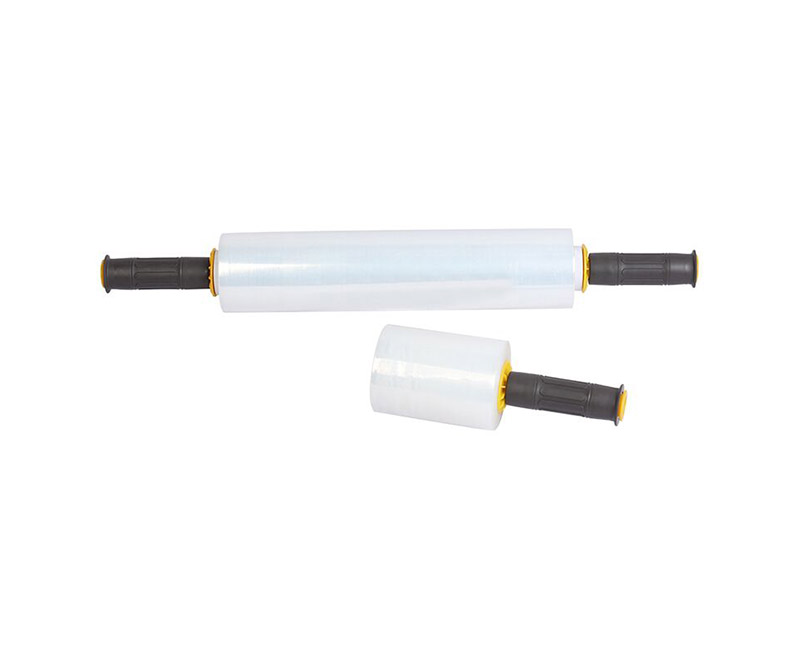
The flexibility of handy stretch film extends to its application methods, catering to both low-volume, manual operations and high-volume, automated processes. Manual application, often using a simple dispenser with a handle, allows for precise control and is perfect for smaller businesses or specific packaging needs. Zhiteng offers "handy stretch film" and "handle" accessories, emphasizing ease of use for manual applications.
- Example 1: Manual Wrapping for Small Businesses: A small e-commerce business preparing individual packages for shipment can quickly and efficiently wrap items using handy stretch film. This method provides immediate protection against dust and moisture, ensuring products like books or small electronics arrive in pristine condition. The soft and smooth feel of Zhiteng's film also contributes to ease of handling.
- Example 2: Machine Wrapping for Industrial Use: For large-scale operations, machine stretch film is integrated into automated pallet wrappers. These machines apply film with consistent tension and speed, significantly increasing throughput and reducing labor costs. Zhiteng's "machine stretch film" is designed for such applications, offering "excellent tensile strength" and "high shrinkage" for robust industrial packaging.
Practical advice for choosing the right method involves assessing your packaging volume, labor availability, and the specific protection requirements of your goods. For occasional or varied packaging tasks, manual application offers flexibility. For repetitive, high-volume tasks, investing in machine wrapping equipment with compatible film will yield greater efficiency and consistency.
2. How Does Handy Stretch Film Enhance Load Stability and Security?
Concerned about your products shifting or getting damaged during transit? Handy stretch film significantly enhances load stability and security by creating a cohesive unit that resists movement, protects against external elements, and provides visible tamper evidence, ensuring goods remain intact from warehouse to destination.
2.1 Unitization and Load Containment
The primary function of stretch film is unitization – binding multiple items into a single, stable load. This is achieved through the film's elastic recovery and cling properties. As the film is stretched around a pallet or bundle, it creates a strong, compressive force that holds all components together. Zhiteng's products are known for their "excellent tensile strength" and "high shrinkage," which are critical for effective load containment. The company emphasizes that stretch film is "the most economical and effective way to ensure cartons stay on pallets."
- Example 1: Preventing Carton Shifting: Imagine a pallet stacked with various sized cartons. Without proper unitization, these cartons can shift, topple, or become damaged during forklift movement or truck transportation. Applying handy stretch film tightly around the entire pallet creates a unified block, preventing individual cartons from moving independently. This is particularly vital for "warehouse distribution."
- Example 2: Securing Irregularly Shaped Items: For items that don't stack neatly, such as machinery parts or furniture components, stretch film can conform to their unique contours, holding them securely in place. This prevents protrusions from snagging or breaking, offering comprehensive protection.
2.2 Protection Against Environmental Factors and Tampering
Beyond physical stability, handy stretch film offers a crucial barrier against environmental elements and acts as a deterrent to tampering. Its moisture-proof and dust-proof qualities are paramount for preserving product quality, especially for sensitive goods. Zhiteng highlights these features, stating their film is "moisture-proof, dust-proof."
- Example 1: Protecting Perishable Goods: Food products, pharmaceuticals, or electronics are highly susceptible to moisture and dust. Wrapping pallets with stretch film creates a protective envelope, safeguarding them from contamination and degradation during storage and transit, especially in varying climates.
- Example 2: Deterring Theft and Tampering: A tightly wrapped pallet makes it difficult for unauthorized individuals to access individual items without leaving visible evidence of tampering. For added security, Zhiteng offers "printed stretch film" and "color stretch film," which can be used for branding or to make any unauthorized access immediately apparent. This visual deterrent is a simple yet effective security measure.
Practical advice for maximizing protection includes ensuring complete coverage of the pallet, including the top, to prevent water ingress. For high-value goods, consider using opaque or colored film to obscure contents and further deter theft. Regularly inspect wrapped pallets for tears or loose areas before shipment to maintain optimal security.
3. What Are the Cost-Saving Benefits of Using Handy Stretch Film?
Are you looking for ways to reduce your packaging expenses without compromising product safety? Handy stretch film offers significant cost savings through reduced material usage, minimized product damage during transit, and optimized labor efficiency, making it an economically sound choice for businesses of all sizes.
3.1 Material Efficiency and Waste Reduction
One of the primary cost benefits of handy stretch film comes from its material efficiency. Modern stretch films are designed to be highly stretchable, meaning less film is required to achieve the same level of containment. Pre-stretched films, in particular, offer superior yield, as they are stretched during manufacturing, allowing users to apply less film while maintaining high load integrity. Zhiteng's focus on "excellent tensile strength" and "high shrinkage" directly translates to using less material per wrap.
- Example 1: Optimizing Film Gauge: By selecting the appropriate film gauge (thickness) for a specific load, businesses can avoid over-packaging. For lighter loads, a thinner, high-performance film can provide adequate security, reducing material costs compared to using a thicker, standard film. This careful selection minimizes waste and maximizes cost-effectiveness.
- Example 2: Pre-Stretch Film for High Volume: Companies with high-volume pallet wrapping operations can significantly reduce film consumption by using pre-stretched film. This film requires less force to apply and achieves greater elongation, meaning fewer wraps are needed per pallet, leading to substantial savings in material costs over time.
3.2 Reduced Product Damage and Returns
Product damage during shipping is a major hidden cost for businesses, leading to returns, reshipments, and damaged customer relationships. Handy stretch film significantly mitigates this risk by stabilizing loads and protecting them from external hazards. Zhiteng's film, with its "moisture-proof, dust-proof" and "anti-slip" properties, directly addresses these concerns.
- Example 1: Fragile Goods Protection: For delicate items like glassware or ceramics, the compressive force of stretch film prevents individual pieces from colliding or shifting within the package, drastically reducing breakage rates. This protection extends to preventing external abrasions or scratches.
- Example 2: Preventing Contamination: In industries like food or pharmaceuticals, contamination can render an entire shipment unusable. The protective barrier of stretch film guards against dust, dirt, and moisture, ensuring products remain hygienic and compliant with quality standards, thereby avoiding costly recalls or rejections.
Practical advice for minimizing damage includes ensuring consistent film overlap (typically 50% or more) and adequate top and bottom wraps to secure the load to the pallet. Regular training for packaging personnel on proper wrapping techniques can also significantly reduce damage rates and associated costs.
4. How Does Handy Stretch Film Contribute to Packaging Efficiency?
Are you looking to speed up your packaging process and optimize labor? Handy stretch film boosts packaging efficiency by simplifying the wrapping process, reducing labor time, and enabling faster throughput, making it an essential tool for streamlining operations in any modern warehouse or distribution center.
4.1 Streamlined Wrapping Process
The inherent design of handy stretch film makes the wrapping process straightforward and quick, whether applied manually or by machine. Its self-adhesive (cling) properties mean there's no need for additional tapes or fasteners, simplifying the entire operation. Zhiteng's film is described as having a "soft and smooth feel," which enhances ease of application for manual users.
- Example 1: Rapid Pallet Preparation: In a busy warehouse, preparing pallets for shipment needs to be fast. A single operator can quickly wrap a pallet using handy stretch film, securing dozens of boxes in minutes. This speed is critical for meeting tight shipping deadlines and maintaining a smooth workflow.
- Example 2: Consistent Machine Application: Automated stretch wrappers can wrap hundreds of pallets per hour with consistent tension and overlap, ensuring uniform packaging quality across all shipments. This consistency eliminates human error and significantly speeds up the entire packaging line. Zhiteng's "machine stretch film" is specifically designed to perform optimally in these high-speed environments.
4.2 Reduced Labor and Time Savings
By simplifying the wrapping process and offering high-speed application options, handy stretch film directly contributes to significant labor and time savings. This allows businesses to reallocate labor to other critical tasks, improving overall operational productivity.
- Example 1: Manual Labor Reduction: Compared to traditional methods like strapping or shrink-wrapping (which often requires heat guns), applying handy stretch film is much faster and requires less specialized skill. This reduces the labor hours spent on packaging per pallet.
- Example 2: Automated System Integration: For large distribution centers, integrating automated stretch wrappers means that one operator can oversee multiple machines, drastically reducing the manual labor required for pallet wrapping. This automation leads to substantial time savings and increased throughput, directly impacting the bottom line. Zhiteng's commitment to "combining professional capabilities and customer needs" helps clients manufacture the most suitable products for their efficiency goals.
Practical advice for maximizing efficiency includes ensuring that film rolls are easily accessible and that dispensers (for manual use) are in good working order. For machine wrapping, regular maintenance of the equipment and proper film loading are crucial to prevent downtime and maintain high operational speed.
5. What Role Does Handy Stretch Film Play in Sustainable Packaging Practices?
Are you concerned about the environmental impact of your packaging choices? Handy stretch film contributes to sustainable packaging practices through its potential for material reduction, recyclability, and its role in preventing product damage, which minimizes waste throughout the supply chain.
5.1 Material Reduction and Recyclability
While plastic film often faces environmental scrutiny, advancements in stretch film technology have focused on reducing material usage and improving recyclability. High-performance films allow for thinner gauges while maintaining strength, meaning less plastic is used per pallet. Furthermore, many stretch films are made from polyethylene, which is a widely recyclable plastic in many regions. Zhiteng acknowledges environmental concerns, mentioning "many people are concerned about its environmental performance" due to "material quality issues" and "plastic film degradation." This indicates an awareness of the need for sustainable solutions.
- Example 1: Down-Gauging for Material Savings: By using advanced LLDPE formulations, manufacturers can produce films that are significantly thinner (e.g., 80 gauge equivalent performance from a 60 gauge film) without compromising load integrity. This "down-gauging" directly reduces the amount of plastic consumed per wrapped pallet.
- Example 2: Post-Consumer Recycled (PCR) Content: Some stretch films now incorporate PCR content, reducing the demand for virgin plastics and supporting a circular economy. While not universally adopted, this trend is growing, offering a more sustainable option for businesses.
5.2 Minimizing Product Waste and Carbon Footprint
Perhaps the most significant, yet often overlooked, environmental benefit of handy stretch film is its role in preventing product damage. When products are damaged in transit, they often become waste, requiring additional resources for disposal, replacement, and re-shipment. By ensuring goods arrive safely, stretch film indirectly reduces the overall carbon footprint associated with product manufacturing and logistics.
- Example 1: Reducing Food Waste: For the food industry, stretch film's ability to protect against moisture, dust, and physical damage is crucial. Preventing spoilage or breakage of food items means less food waste ending up in landfills, which has a substantial positive environmental impact.
- Example 2: Lowering Logistics Emissions: When products are damaged, they often need to be re-shipped, leading to additional transportation emissions. By minimizing damage, stretch film helps reduce the need for these extra shipments, contributing to a lower overall carbon footprint for the supply chain. Zhiteng's focus on "quality, service, and environmental protection" in its management system underscores this commitment.
Practical advice for enhancing sustainability includes implementing a robust recycling program for used stretch film within your facility. Additionally, continuously evaluating film performance to ensure you're using the minimum amount necessary to secure your loads can further reduce material consumption.
Conclusion
Handy stretch film has undeniably become the preferred choice for modern packaging, offering a compelling blend of versatility, security, cost-effectiveness, and efficiency. From its ability to adapt to diverse products and applications to its crucial role in preventing damage and streamlining operations, its benefits are clear. As businesses increasingly prioritize both operational excellence and environmental responsibility, the continuous innovation in stretch film technology, championed by companies like Dongguan Zhiteng Plastic Products Co., Ltd., ensures it will remain a cornerstone of effective and sustainable packaging solutions for years to come.
Recommended Products
Ranked in the same article
- how to use the stretch film technology to r
- How can we get detailed price list?
- Gauge to Micron and Millimetre Conversion G
- Five common quality problems of PE protecti
- Plastic film degradation
- How to guarantee punctual shipment for our
- What is the difference between stretch film
- Testing the permeability of stretch film
- Stretch film temperature requirements
- 2025 Guangzhou Packaging Expo Opens, Zhiten
- Electrical wire film VS electrostatic film
Latest news articles
- What Role Does Material Science Play in Enh
- how to use the stretch film technology to r
- Why does stretch film wrinkle when it is us
- Our services
- How to identify high quality flexible stret
- The Ultimate Guide to Hand Stretch Film: Ev
- Bundling Stretch Film: The Ultimate Guide f
- Unraveling the Science: What Factors Influe
- What effects can different colours of Color
- SWOP - SHANGHAI WORLD OF PACKAGING 2019
- What is Bundling Stretch Film? Your Packagi