
Clear vs Colored Stretch Film: Which Reduces Errors?
Source:Clear vs Colored Stretch Film: Which Reduces Errors?Time:2026-05-14Visitors:
Are persistent warehouse errors like mis-shipments, inventory discrepancies, or quality control mix-ups slowing down your operations and costing you money? Inefficient identification methods often lead to frustrating and costly mistakes, impacting customer satisfaction and profitability. Colored stretch film reduces warehouse errors faster than clear film by providing immediate, visual identification for different product types, destinations, or inventory statuses, streamlining sorting and minimizing mis-picks and mis-shipments.
In the bustling environment of a modern warehouse, speed and accuracy are paramount. Every second counts, and every error can lead to a cascade of problems, from delayed deliveries to expensive returns. The choice of stretch film, seemingly a minor detail, can actually play a significant role in your operational efficiency and error reduction strategy. Let's delve into how clear and colored films stack up in the fight against warehouse mistakes.
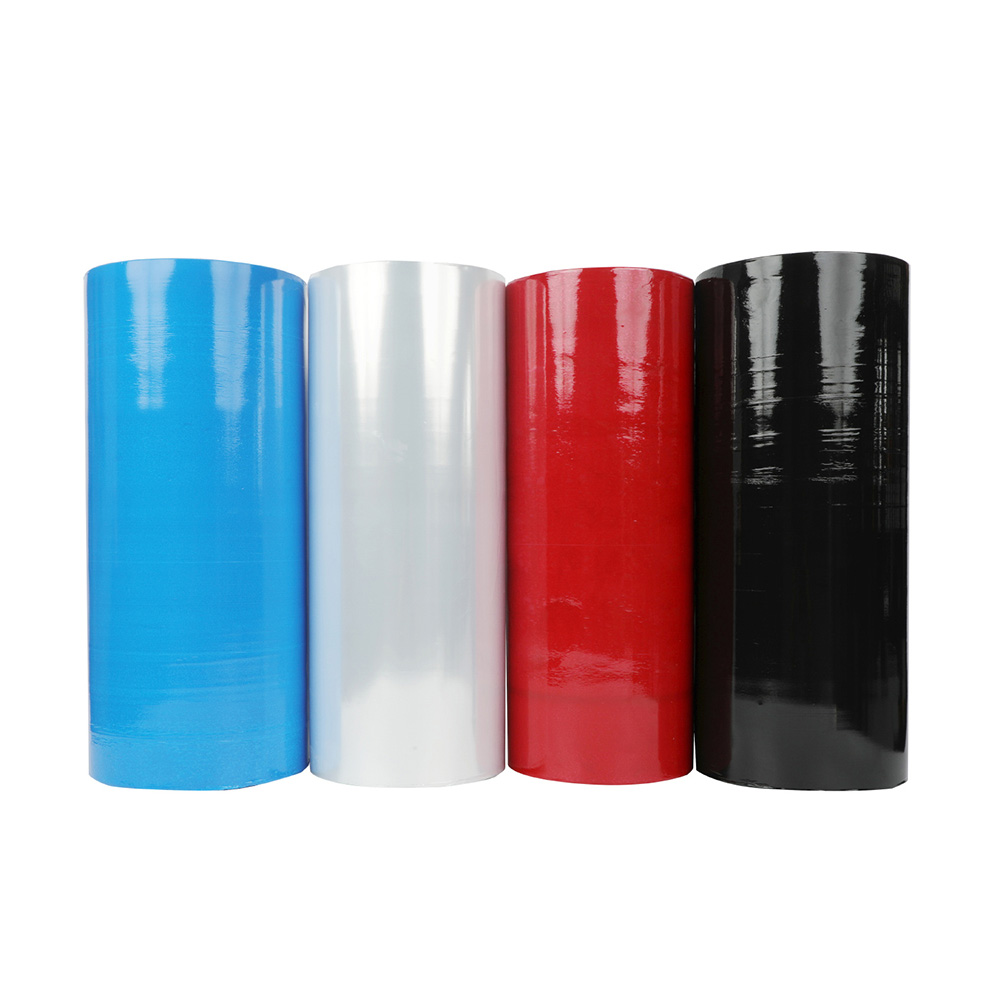
Table of Contents
- What are the Primary Functions of Clear and Colored Stretch Film?
- How Does Clear Stretch Film Impact Warehouse Error Rates?
- How Does Colored Stretch Film Accelerate Error Reduction in Warehouses?
- What Specific Warehouse Errors Are Best Addressed by Each Film Type?
- What Best Practices Maximize Error Reduction with Stretch Film?
1. What are the Primary Functions of Clear and Colored Stretch Film?
Before diving into error reduction, it's essential to understand the fundamental roles each type of film plays in packaging and logistics.
Clear stretch film primarily offers transparent load containment, allowing for easy visual inspection of contents and barcodes, while colored stretch film serves the dual purpose of load containment and immediate visual identification or coding for specific product categories or destinations.
1.1 Clear Film: Visibility and Universal Application
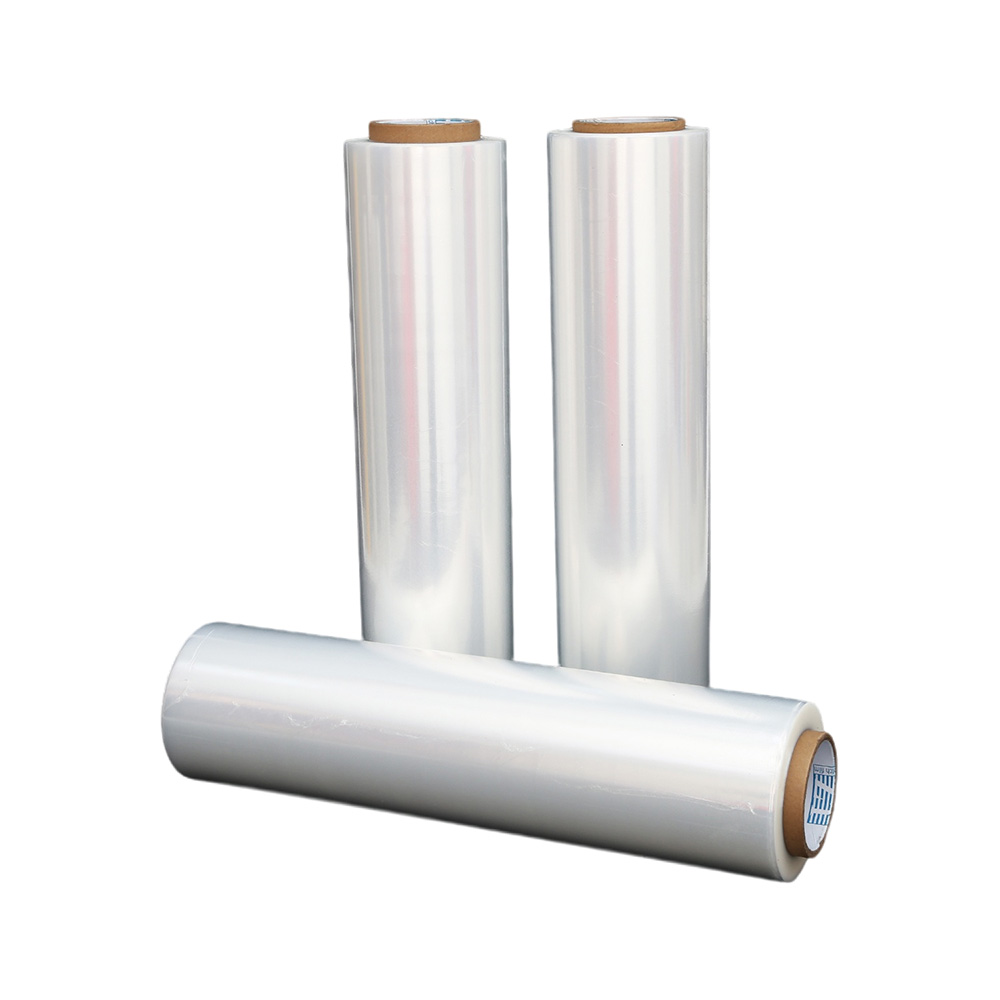
Clear stretch film is the most common type of pallet wrap, prized for its transparency. Its primary function is to secure and protect palletized loads from dust, moisture, and shifting during transit and storage, while allowing the contents to remain fully visible. This visibility is crucial for several reasons: it enables quick identification of products without unwrapping, allows for easy scanning of barcodes or labels, and facilitates security checks without obstruction. Clear film is universally applicable across almost all industries and product types, making it a versatile and often default choice for many warehouses. Its transparent nature also means it doesn't interfere with any existing branding or labeling on the packaged goods.
- Example 1: Retail Distribution: A retail distribution center uses clear film for pallets containing mixed SKUs, allowing forklift operators and inventory staff to quickly verify contents and scan product labels without delay.
- Example 2: Security Checks: In high-security environments or for international shipments, clear film allows customs officials or security personnel to visually inspect the pallet's contents without having to break the wrap, streamlining inspection processes.
Practical Advice: While clear film offers visibility, ensure your internal labeling and barcode systems are robust enough to compensate for its lack of visual differentiation, especially if you handle a wide variety of similar-looking products.
1.2 Colored Film: Identification and Coding
Colored stretch film, in addition to providing load containment and protection, offers a powerful visual coding system. Its primary function is to allow for immediate, at-a-glance identification of specific product categories, destinations, inventory statuses, or even shifts. By assigning different colors to different criteria (e.g., red for urgent shipments, blue for international, green for finished goods), warehouses can create a highly intuitive and rapid visual communication system. This color coding significantly reduces the time spent identifying pallets and minimizes errors associated with mis-picking or mis-shipping. Dongguan Zhiteng Plastic Products Co., Ltd. offers colored stretch film and printed stretch film, directly supporting these advanced identification strategies.
- Example 1: Production Line Segregation: A manufacturing plant uses blue film for finished goods ready for shipment, yellow for products awaiting quality control, and red for defective items, preventing mix-ups between stages.
- Example 2: Destination Coding: A logistics hub uses green film for pallets destined for the West Coast, orange for the East Coast, and purple for local deliveries, allowing forklift drivers to quickly sort and load trucks without checking manifests for every pallet.
Multi-angle Analysis:
The use of colored film introduces a layer of visual management that can significantly impact operational speed and accuracy. Theoretically, the human brain processes color faster than text or numbers, making identification almost instantaneous. From a design trade-off perspective, while colored film obscures the contents, the benefit of rapid categorization often outweighs the need for direct visual inspection, especially when contents are standardized or well-known. Practically, this can reduce training time for new staff and minimize language barriers in diverse workforces.
Practical Advice: Before implementing colored film, develop a clear, consistent color-coding scheme and ensure all warehouse staff are thoroughly trained on its meaning. Regularly audit the system to ensure compliance and effectiveness.
2. How Does Clear Stretch Film Impact Warehouse Error Rates?
Clear film's transparency offers certain advantages, but it also presents challenges that can influence error rates in a busy warehouse environment.
Clear stretch film can indirectly contribute to warehouse errors by lacking immediate visual differentiation for similar loads, potentially leading to mis-picks or mis-sorts if relying solely on visual inspection without robust secondary identification systems.
2.1 Advantages of Transparency for Verification
The transparency of clear stretch film is its main advantage, allowing for easy visual verification of a pallet's contents and the scanning of barcodes or labels. This can be beneficial for reducing certain types of errors, particularly those related to incorrect labeling or missing information. When a pallet arrives or is about to be shipped, an operator can quickly glance at the contents to confirm they match the manifest or scan a barcode without needing to cut or remove the film. This direct visibility can act as a final check, catching errors that might have occurred earlier in the process. For companies with diverse product lines and detailed labeling, clear film supports existing verification protocols.
- Example 1: Barcode Scanning: A warehouse relies heavily on barcode scanning for inventory management. Clear film ensures that all barcodes on individual boxes or master cartons are easily scannable, preventing errors from manual data entry or obstructed labels.
- Example 2: Quality Control Spot Checks: During outbound staging, quality control personnel can perform quick visual checks on pallet contents through clear film to ensure product integrity or correct item counts, acting as a last line of defense against errors.
Practical Advice: Maximize the error-reduction potential of clear film by ensuring all products are consistently and clearly labeled, and that barcodes are placed in easily accessible locations for scanning.
2.2 Limitations in Rapid Differentiation
While transparency is beneficial for detailed verification, it becomes a limitation when rapid differentiation is required, especially in high-volume warehouses handling numerous similar-looking pallets. Without a distinct visual cue, operators must rely on reading labels, scanning barcodes, or consulting manifests for every pallet, which is time-consuming and prone to human error, particularly under pressure. This lack of immediate visual distinction can lead to:
- Mis-picks: Selecting the wrong pallet from a row of identical-looking ones.
- Mis-sorts: Placing a pallet in the wrong staging lane or loading it onto the incorrect truck.
Slowed Operations: Operators spend more time verifying each pallet, reducing overall throughput.
- These errors can quickly accumulate, impacting delivery schedules and customer satisfaction.
- Example 1: Identical Pallets, Different Destinations: A beverage distributor has multiple pallets of the same soda, but each is destined for a different store. With clear film, operators must read each small destination label, increasing the risk of loading the wrong pallet onto a truck.
- Example 2: Inventory Discrepancies: In a large storage area, identifying specific batches or production dates on pallets wrapped in clear film requires closer inspection, potentially leading to inventory errors if not meticulously managed.
Multi-angle Analysis:
The theoretical basis here is cognitive load. Clear film, while providing raw information, places a higher cognitive load on the operator to process and differentiate. This increases the likelihood of human error, especially when fatigued or rushed. The design trade-off is between universal visibility and rapid, intuitive categorization. For practical impacts, this translates to slower decision-making on the warehouse floor and a higher potential for costly mis-shipments, particularly in environments with high SKU density or rapid turnover.
Practical Advice: If you primarily use clear film and experience high rates of mis-picks or mis-sorts, consider implementing large, color-coded labels or flags in conjunction with the clear film to provide a faster visual cue.
3. How Does Colored Stretch Film Accelerate Error Reduction in Warehouses?
Colored stretch film introduces a powerful visual language that can dramatically speed up identification and reduce errors.
Colored stretch film accelerates error reduction by providing instant visual cues for categorization, allowing warehouse personnel to quickly identify and sort pallets by destination, product type, or status, thereby minimizing mis-picks, mis-sorts, and improving overall operational speed and accuracy.
3.1 Instant Visual Identification and Sorting
The most significant advantage of colored stretch film is its ability to provide instant visual identification. By assigning specific colors to different categories—such as product lines, shipping destinations, urgent orders, or quality control statuses—warehouses can create a highly efficient visual management system. This allows forklift drivers, order pickers, and shipping personnel to identify and sort pallets at a glance, without needing to stop, read labels, or scan barcodes for every single load. The human eye processes color much faster than text, leading to quicker decision-making and a substantial reduction in errors related to mis-identification. This immediate recognition streamlines workflows and significantly speeds up the sorting process.
- Example 1: Cross-Docking Operations: In a busy cross-docking facility, incoming pallets wrapped in red film are immediately directed to the "urgent outbound" lane, while blue film indicates "standard delivery," drastically reducing sorting time and mis-routes.
- Example 2: Batch Management: A food processor uses yellow film for Batch A, green for Batch B, and blue for Batch C. This allows for quick identification of specific batches for recall purposes or FIFO (First-In, First-Out) inventory rotation, preventing costly mix-ups.
Practical Advice: Start with a simple color-coding scheme and expand it as needed. Ensure colors are distinct and easily recognizable under various lighting conditions.
3.2 Enhanced Security and Tamper Evidence
Beyond identification, colored stretch film can also enhance security and provide tamper evidence, further reducing errors and losses. Opaque colored films (especially black or dark colors) obscure the contents of a pallet, deterring casual theft or "shrinkage" by making it harder for unauthorized individuals to identify valuable items. If a pallet wrapped in colored film is tampered with, the broken or re-wrapped film is immediately noticeable, providing clear evidence of interference. This acts as a visual deterrent and allows for prompt investigation, reducing errors related to missing inventory or compromised shipments. Dongguan Zhiteng Plastic Products Co., Ltd. offers "彩色缠绕膜" (colored stretch film) which can serve these security purposes.
- Example 1: High-Value Electronics: A distributor of high-value electronics uses black stretch film for all outgoing pallets. This not only makes the contents less visible but also ensures that any attempt to access the product will be immediately apparent due to the disturbed film.
- Example 2: Pharmaceutical Shipments: Pharmaceutical companies might use a specific colored film for sensitive shipments. Any break in the film indicates potential tampering, triggering immediate security protocols and preventing the distribution of compromised products.
Multi-angle Analysis:
The theoretical basis for tamper evidence is the "broken seal" principle – any disruption to the film's integrity is a clear signal. From a design trade-off, obscuring contents might require more reliance on external labels, but the security benefit often outweighs this for high-value or sensitive goods. Practically, this reduces inventory discrepancies caused by theft and enhances trust in the supply chain, ultimately contributing to faster error resolution by identifying issues at the point of tampering rather than at the destination.
Practical Advice: For tamper evidence, consider using a unique or custom-colored film that is difficult to replicate. Combine with printed film (like Zhiteng's "印刷缠绕膜") that includes company logos or sequential numbering for an even stronger deterrent.
4. What Specific Warehouse Errors Are Best Addressed by Each Film Type?
A direct comparison reveals how each film type targets different error categories, highlighting their respective strengths.
Clear stretch film is best for reducing errors related to barcode scanning and visual content verification, while colored stretch film excels at preventing mis-picks, mis-sorts, and mis-shipments through rapid, intuitive visual categorization.
4.1 Errors Best Addressed by Clear Film
Clear stretch film is particularly effective at addressing errors that require direct visual confirmation of a pallet's contents or the scanning of labels. These typically include:
- Barcode Scanning Errors: Clear film ensures that all barcodes on individual boxes or master cartons are unobstructed and easily scannable, reducing manual entry errors and speeding up inventory updates.
- Content Verification Errors: For pallets containing a mix of products or where precise item identification is crucial, clear film allows operators to visually confirm the contents against a manifest, catching discrepancies before shipment.
Quality Control Spot Checks: QC personnel can quickly inspect product condition, packaging integrity, or specific labels without unwrapping, ensuring compliance and preventing damaged goods from being shipped.
- In these scenarios, the transparency of the film acts as an enabler for existing verification systems, rather than a primary identification tool itself.
- Example 1: Mixed SKU Pallets: A pallet containing various small electronic accessories needs to be verified before shipping. Clear film allows the operator to see and scan each individual box, ensuring the correct items and quantities are present.
- Example 2: Incoming Goods Inspection: When receiving goods, clear film allows receiving staff to quickly visually inspect the general condition of the product and verify labels against the purchase order, flagging any immediate discrepancies.
Practical Advice: For optimal error reduction with clear film, ensure your warehouse lighting is adequate, and that all labels and barcodes are printed clearly and placed consistently on packages.
4.2 Errors Best Addressed by Colored Film
Colored stretch film is a powerful tool for rapidly reducing errors related to categorization, routing, and inventory management, especially in high-speed or complex operations. These errors include:
- Mis-picks: Operators quickly identify the correct pallet based on color, reducing the chance of picking the wrong product or batch.
- Mis-sorts/Mis-shipments: Pallets are routed to the correct staging lanes or loaded onto the right trucks based on their color code, preventing costly mis-deliveries.
- Inventory Discrepancies: Color-coding by batch, date, or status helps maintain accurate inventory records and facilitates FIFO rotation, reducing spoilage or obsolescence.
Quality Control Holds: Clearly marked "hold" pallets (e.g., yellow film) prevent accidental movement or shipment of non-conforming products.
- The immediate visual cue provided by colored film significantly reduces cognitive load and decision-making time, leading to faster and more accurate operations.
- Example 1: Urgent vs. Standard Orders: A warehouse uses red film for all "rush" orders and blue for "standard" orders. Forklift drivers can prioritize red-wrapped pallets instantly, preventing delays in critical shipments.
- Example 2: Production Line Segregation: In a factory, pallets of raw materials are wrapped in white, work-in-progress in green, and finished goods in blue. This visual distinction prevents materials from being used at the wrong stage or finished goods from being held back.
Multi-angle Analysis:
The effectiveness of colored film in error reduction stems from its ability to leverage pre-attentive processing – the human brain can detect color differences almost instantaneously without conscious effort. This contrasts with clear film, which requires attentive processing (reading, scanning). The practical impact is a significant reduction in the time spent on identification tasks, directly translating to faster throughput and fewer errors in high-pressure environments. Zhiteng's "彩色缠绕膜" (colored stretch film) directly supports these visual management strategies.
Practical Advice: Implement a standardized color-coding system that is simple, intuitive, and prominently displayed throughout the warehouse. Regular training and reinforcement are key to its success.
5. What Best Practices Maximize Error Reduction with Stretch Film?
Regardless of the film type chosen, implementing best practices is crucial to fully leverage its potential for error reduction.
To maximize error reduction with stretch film, implement a clear, consistent coding system, ensure proper film application, provide comprehensive operator training, regularly audit processes, and leverage high-quality film from reliable suppliers like Zhiteng.
5.1 Implement a Clear and Consistent Coding System
The foundation of error reduction, especially with colored film, is a well-defined and consistently applied coding system. This system should be simple, intuitive, and easily understood by all warehouse personnel. Whether using colors for destinations, product types, or inventory statuses, the meaning of each color must be unambiguous and prominently displayed throughout the facility. For clear film, this means ensuring all labels, barcodes, and placards are consistently placed, clearly legible, and accurately reflect the pallet's contents. Any ambiguity or inconsistency in the coding system will negate its benefits and can even introduce new errors. Zhiteng's "印刷缠绕膜" (printed stretch film) can also be integrated here, adding logos, warnings, or specific instructions directly onto the film for enhanced clarity.
- Example 1: Standard Operating Procedure (SOP): A warehouse develops an SOP detailing the exact color to be used for each shipping lane and posts large color-coded signs above each lane, ensuring consistent application and easy reference for operators.
- Example 2: Dual-Layer Coding: For complex loads, a company might use clear film to allow barcode scanning, but then apply a single band of colored film (or Zhiteng's "捆扎缠绕膜" in color) around the middle to provide a rapid visual cue for routing.
Practical Advice: Involve your warehouse team in the design of the coding system. Their input will ensure it's practical and effective for daily operations.
5.2 Proper Film Application and Quality Assurance
Even the best coding system is ineffective if the film itself is not applied correctly or is of poor quality. Proper film application ensures the integrity of the wrap, protecting the load and keeping labels visible. This includes:
- Optimal Tension: Applying film with the correct tension (especially with pre-stretch film) ensures a secure wrap that prevents shifting and keeps labels flat and readable.
- Consistent Overlap: Ensuring consistent overlap between film layers prevents gaps that could expose contents or obscure labels.
Film Quality: Using high-quality film (like Zhiteng's, known for "优异的拉伸力" and "高回缩力") minimizes breaks, ensuring the coding remains intact and reducing downtime for re-wrapping.
- Regular maintenance of pallet wrappers and training operators on correct wrapping techniques are crucial for consistent application. Zhiteng's "ISO 9001" certification reflects their commitment to quality, ensuring their films support reliable application.
- Example 1: Wrapper Calibration: A warehouse regularly calibrates its pallet wrappers to ensure optimal pre-stretch and tension settings, preventing film breaks that would disrupt color coding and ensuring maximum load stability.
- Example 2: Operator Training: Operators are trained not only on machine operation but also on how to identify and correct issues like insufficient overlap or uneven tension, ensuring every pallet is wrapped correctly.
Multi-angle Analysis:
The theoretical basis here is that a robust physical application of the film is foundational to any error reduction strategy. A poorly wrapped pallet, regardless of film color, is prone to damage, shifting, and obscured labels, which can all lead to errors. The design trade-off is between speed and quality of wrap; however, with high-performance films and well-maintained machines, both can be achieved. Practically, investing in quality film and training reduces re-work, prevents damage-related errors, and ensures the visual coding system remains effective.
Practical Advice: Partner with a reputable film supplier like Zhiteng, who can provide high-quality films and potentially offer guidance on optimal wrapping techniques and machine settings.
Conclusion
When evaluating clear versus colored stretch film for faster warehouse error reduction, colored stretch film emerges as the more effective solution. While clear film offers valuable transparency for barcode scanning and visual content verification, its lack of immediate differentiation can slow down operations and contribute to mis-picks and mis-sorts in high-volume environments. Colored film, by contrast, provides instant visual cues for categorization, allowing warehouse personnel to rapidly identify and sort pallets by destination, product type, or status. This intuitive visual coding significantly accelerates decision-making, minimizes mis-shipments, and enhances security through tamper evidence. To maximize these benefits, businesses must implement clear and consistent coding systems, ensure proper film application, provide comprehensive operator training, and partner with quality-focused suppliers like Dongguan Zhiteng Plastic Products Co., Ltd. By strategically leveraging colored stretch film, warehouses can achieve a faster, more accurate, and ultimately more cost-effective operation.
Recommended Products
Ranked in the same article
- how to use the stretch film technology to r
- How can we get detailed price list?
- Gauge to Micron and Millimetre Conversion G
- Five common quality problems of PE protecti
- Plastic film degradation
- How to guarantee punctual shipment for our
- What is the difference between stretch film
- Testing the permeability of stretch film
- Stretch film temperature requirements
- 2025 Guangzhou Packaging Expo Opens, Zhiten
- Electrical wire film VS electrostatic film
Latest news articles
- Unraveling the Science: What Factors Influe
- Why does stretch film wrinkle when it is us
- What Role Does Material Science Play in Enh
- SWOP - SHANGHAI WORLD OF PACKAGING 2019
- The Ultimate Guide to Hand Stretch Film: Ev
- What is Bundling Stretch Film? Your Packagi
- how to use the stretch film technology to r
- What effects can different colours of Color
- How to identify high quality flexible stret
- Bundling Stretch Film: The Ultimate Guide f
- Our services