
Why Should You Switch to Colored Stretch Film?
Source:Why Should You Switch to Colored Stretch Film?Time:2026-05-14Visitors:
Managing a chaotic warehouse often leads to inventory confusion, mis-shipped pallets, and significant security risks. These errors frustrate customers and drain your profits daily. Implementing a color-coded stretch film system provides a simple, visual solution to streamline logistics and protect your bottom line effectively.
Switching to colored stretch film improves warehouse efficiency by enabling instant visual identification for inventory coding, destination sorting, and quality control. It also enhances security by obscuring high-value contents and providing clear tamper evidence, reducing mis-shipments and theft while maintaining superior load stability.
The transition from standard clear film to a color-coded system is more than just an aesthetic choice; it is a strategic operational upgrade. Imagine a facility where every worker knows exactly where a pallet is headed just by glancing at its color. This level of intuitive management is exactly what high-quality colored films provide for modern logistics.
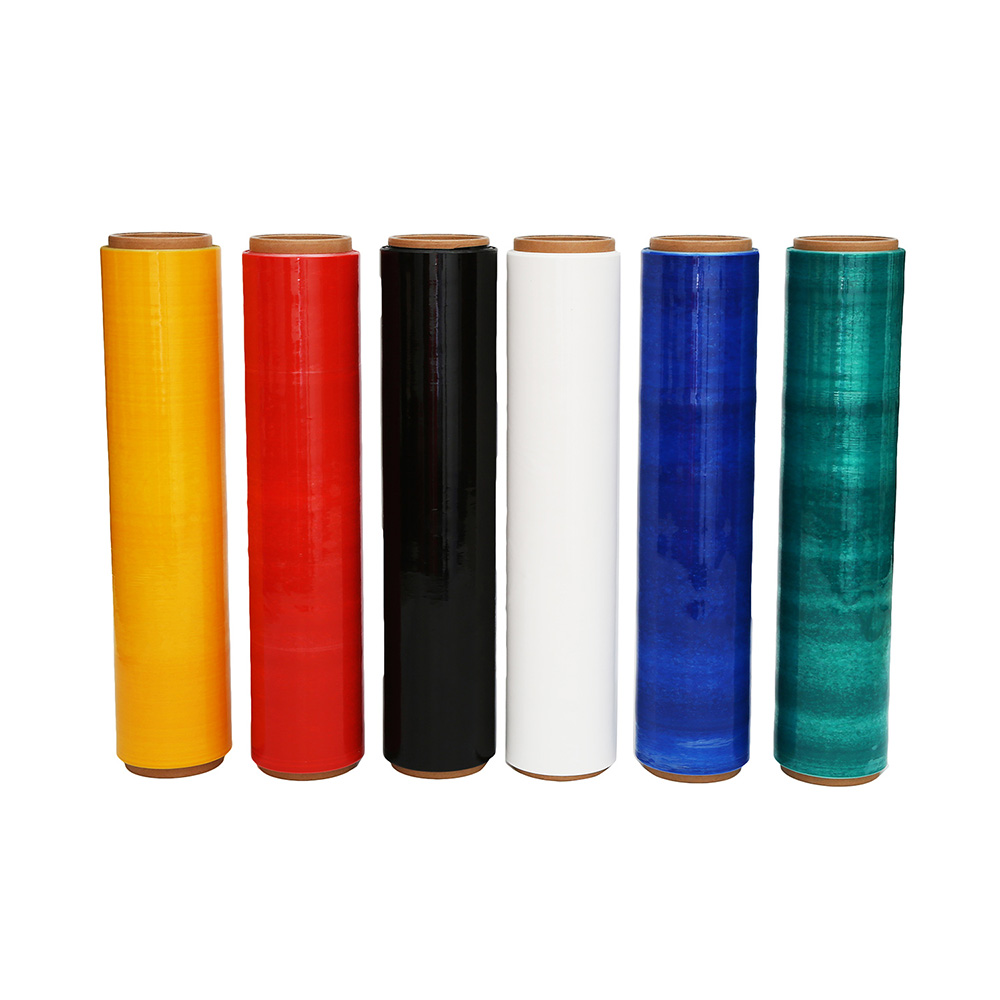
Table of Contents
- How Does Colored Stretch Film Improve Inventory Management?
- Can Colored Stretch Film Enhance Shipping Accuracy and Speed?
- Does Colored Stretch Film Provide Better Security and Privacy?
- What Are the Branding and Quality Control Benefits?
1. How Does Colored Stretch Film Improve Inventory Management?
Keeping track of diverse SKUs and production batches can be a logistical nightmare. Traditional labeling often fails in fast-paced environments where quick decisions are necessary for maintaining a smooth and efficient operational flow.
Colored stretch film improves inventory management by providing a rapid visual coding system. Assigning specific colors to different product lines, batches, or expiration dates allows staff to identify, locate, and rotate stock at a glance, significantly reducing picking errors and improving warehouse throughput.
1.1 Visual Coding for Batch Control and FIFO
In large-scale manufacturing and distribution, implementing a First-In, First-Out (FIFO) system is critical to prevent product obsolescence. By using different colors for different production months or quarters, warehouse managers can ensure that older stock is moved first without needing to read every individual date code on a small label. For example, Dongguan Zhiteng Plastic Products Co., Ltd. provides a variety of colored films that can be used to distinguish specific batches across vast storage racks.
From a multi-angle analysis, this approach reduces the cognitive load on warehouse staff. Theoretically, the human brain processes color significantly faster than text or numbers. Practically, this means a forklift operator can identify the correct pallet from a distance, reducing travel time and the physical strain of getting off the machine to check labels. The design trade-off—using color instead of just transparency—prioritizes organizational speed over content visibility. This is particularly effective in high-density storage where labels might be obscured by racking.
1.2 Practical Applications in Large Warehouses
Consider a facility handling both seasonal and year-round goods. Using green film for seasonal items and blue for year-round staples allows for immediate floor organization and prevents inventory from getting lost in the shuffle. This method is highly effective in industries like food processing or electronics where batch integrity is paramount.
- Example 1: Food Processing: A facility uses yellow film for products awaiting lab clearance and green for cleared goods, preventing accidental processing of unverified batches.
- Example 2: Electronics Distribution: Different colors represent different regions (e.g., Red for North America, Blue for Europe), ensuring pallets are staged in the correct zones.
By utilizing Zhiteng's "excellent tensile strength" films, companies don't have to sacrifice load security for organization. The film maintains high rebound force, ensuring that even while categorized by color, the pallet remains stable during high-speed warehouse movements.
2. Can Colored Stretch Film Enhance Shipping Accuracy and Speed?
Mis-shipped pallets are a costly mistake that damages customer trust and increases return logistics expenses. In a busy shipping dock, relying solely on small paper labels can lead to frequent errors during peak hours.
Colored stretch film enhances shipping accuracy by allowing for immediate destination or carrier identification. By color-coding pallets based on their final route or shipping zone, loaders can quickly sort and verify shipments, ensuring the right products reach the correct trucks with minimal delay.
2.1 Streamlining Logistics and Cross-Docking
In cross-docking operations, where speed is the primary metric, colored film acts as a silent navigator. When a truck arrives, loaders can visually match the pallet color to the truck's designated route. This is particularly useful when multiple carriers are picking up from the same dock simultaneously. Using Zhiteng’s high-quality colored stretch film allows for a high-contrast visual cue that stands out even in low-light warehouse conditions.
The design trade-off here involves the cost of the film versus the cost of a mis-shipment. While colored film may have a slight premium over clear film, the cost of a single returned pallet—including freight, labor, and potential product damage—often exceeds the annual cost difference of the film itself. Practically, this method reduces the "search time" for loaders, which directly impacts the number of trucks that can be processed per shift. Theoretically, this aligns with Lean Manufacturing principles by removing "motion" and "waiting" waste from the shipping process.
- Example 1: Regional Sorting: A logistics hub uses orange film for East Coast shipments and purple for West Coast, allowing for rapid sorting at the loading bay.
- Example 2: Carrier Identification: A warehouse uses specific colors to match the branding of their major carriers, making it impossible for a driver to accidentally take the wrong pallet.
2.2 Enhancing Throughput in Distribution Centers
By reducing the time spent verifying labels, distribution centers can increase their daily pallet throughput and minimize bottlenecks at the loading bay. This is essential for meeting tight delivery windows in e-commerce and retail supply chains.
Benefits of Color-Coded Shipping:
- Reduced Loading Time: Loaders spend less time reading and more time moving.
- Error Prevention: Visual mismatches are caught instantly by supervisors.
- Improved Communication: Language barriers are minimized as color is a universal language.
- Carrier Satisfaction: Faster turn-around times for drivers.
Using "machine stretch film" in colors further automates this process, ensuring that every pallet coming off the production line is automatically categorized before it even reaches the staging area.
3. Does Colored Stretch Film Provide Better Security and Privacy?
High-value goods are often targets for theft during transit or storage. Standard clear film leaves your inventory exposed, inviting unwanted attention and increasing the risk of "shrinkage" within your supply chain.
Colored stretch film provides superior security by obscuring the contents of a pallet, deterring theft of high-value items. Additionally, it offers immediate tamper evidence; any attempt to cut or replace the unique colored wrap is easily detectable, unlike standard clear film.
3.1 Theft Deterrence and Opaque Protection
Opaque colored films, such as black or white, act as a physical and psychological barrier. When a pallet's contents are hidden, the "crime of opportunity" is significantly reduced because the thief does not know if the pallet contains high-value electronics or low-value paper goods. Zhiteng’s black stretch film is specifically designed for high opacity, ensuring that even under bright lights, the contents remain private.
From a theoretical basis, this is known as "target hardening." By making the contents unknown, you remove the incentive for theft. Practically, if a thief does attempt to access the goods, they cannot simply re-wrap the pallet with standard clear film found in most trucks or warehouses. The unique color serves as a "seal" that, once broken, is impossible to hide without the exact matching colored film. This design trade-off sacrifices the ability to visually inspect contents for the benefit of high-level security.
3.2 Tamper Evidence in the Supply Chain
In the pharmaceutical or high-end retail sectors, maintaining the integrity of the wrap is vital for safety and brand protection. Any disruption to the film is a red flag for the receiving party.
- Example 1: High-End Electronics: A manufacturer wraps all smartphone shipments in a specific shade of blue. If a pallet arrives at the retailer in clear wrap, it is immediately flagged as compromised.
- Example 2: Confidential Documents: Secure shredding companies use opaque film to ensure that sensitive documents are not visible to unauthorized personnel during transport.
Zhiteng's films are known for being "moisture-proof and dust-proof," which adds another layer of security by protecting the physical state of the product while it is hidden from view.
4. What Are the Branding and Quality Control Benefits?
Maintaining a professional brand image and strict quality standards is essential for market leadership. Packaging is often the first physical touchpoint a customer has with your product upon delivery, making first impressions vital.
Colored stretch film supports branding and quality control by creating a professional, uniform appearance for shipments. It also allows for the easy segregation of "on-hold" or "rejected" materials, preventing non-conforming products from accidentally entering the supply chain.
4.1 Professional Aesthetics and Brand Recognition
Using colored film that matches your corporate identity can make your shipments stand out in a crowded receiving dock. It projects an image of organization and attention to detail. Furthermore, Dongguan Zhiteng Plastic Products Co., Ltd. offers printed stretch film, which allows companies to add logos or handling instructions directly onto the colored background, further enhancing brand visibility and safety.
In terms of quality control (QC), colored film is an unbeatable tool for segregation. In many ISO-certified facilities, like those Zhiteng supports with its ISO 9001 standards, red film is used exclusively for "Rejected" or "Non-Conforming" parts. This physical barrier ensures that these items are never mistakenly moved to the shipping area. The multi-angle analysis shows that while clear film is cheaper, the risk of a QC failure reaching a customer is a much higher financial and reputational cost.
- Example 1: Brand Uniformity: A luxury furniture brand uses white stretch film to give their pallets a clean, high-end look that matches their premium pricing.
- Example 2: Safety Segregation: A chemical plant uses bright orange film for hazardous materials to ensure they are handled with the necessary precautions.
4.2 Practical QC Testing and Guidance
To maximize the benefits of colored film for QC, companies should establish a strict color-standard chart and train all staff on its meaning. This prevents "human error" where a worker might forget what a specific color represents.
Standardized QC Color List:
- Red: Rejected / Scrap material.
- Yellow: Quarantined / Awaiting Test Results.
- Green: Approved for use/shipment.
- Orange: Hazardous or special handling required.
- White/Black: High-value or branded finished goods.
By combining "professional technical personnel" with high-quality "hand stretch film" or "machine film," Zhiteng helps global buyers implement these OEM services to meet specific industrial standards.
Conclusion
Switching to colored stretch film is a high-impact, low-cost investment that addresses multiple warehouse challenges simultaneously. By leveraging the power of visual communication, businesses can drastically improve inventory accuracy, accelerate shipping speeds, and enhance the security of their valuable goods. Whether you are looking to deter theft with opaque black film or organize your production flow with a multi-color system, the benefits in operational efficiency and brand professionalism are clear. Partnering with an experienced manufacturer like Dongguan Zhiteng Plastic Products Co., Ltd. ensures you receive film with the high tensile strength and rebound force necessary to keep your loads secure while reaping the rewards of a color-coded system.
Recommended Products
Ranked in the same article
- how to use the stretch film technology to r
- How can we get detailed price list?
- Gauge to Micron and Millimetre Conversion G
- Five common quality problems of PE protecti
- Plastic film degradation
- How to guarantee punctual shipment for our
- What is the difference between stretch film
- Testing the permeability of stretch film
- Stretch film temperature requirements
- 2025 Guangzhou Packaging Expo Opens, Zhiten
- Electrical wire film VS electrostatic film
Latest news articles
- What Role Does Material Science Play in Enh
- The Ultimate Guide to Hand Stretch Film: Ev
- Why does stretch film wrinkle when it is us
- SWOP - SHANGHAI WORLD OF PACKAGING 2019
- How to identify high quality flexible stret
- Our services
- What effects can different colours of Color
- Unraveling the Science: What Factors Influe
- how to use the stretch film technology to r
- What is Bundling Stretch Film? Your Packagi
- Bundling Stretch Film: The Ultimate Guide f