Can Colored Stretch Film Prevent Shipment Mix-Ups?
Source:Can Colored Stretch Film Prevent Shipment Mix-Ups?Time:2026-05-14Visitors:
Shipping errors lead to costly returns and damaged client relationships. In a fast-paced loading dock, small paper labels are easily missed or obscured, causing logistical chaos and financial loss. Yes, colored stretch film prevents shipment mix-ups by providing an instant visual cue for destination and carrier sorting. This high-contrast system allows loaders to verify pallets from a distance, ensuring the right goods reach the correct truck every time while maintaining load stability.
Imagine a busy distribution center during the peak holiday season. Forklifts are buzzing, and hundreds of pallets are staged for departure. In this high-pressure environment, a single misread label can send a high-value shipment to the wrong coast. By implementing a color-coded system, you transform your warehouse into an intuitive environment where errors are caught by sight before they ever leave the dock.
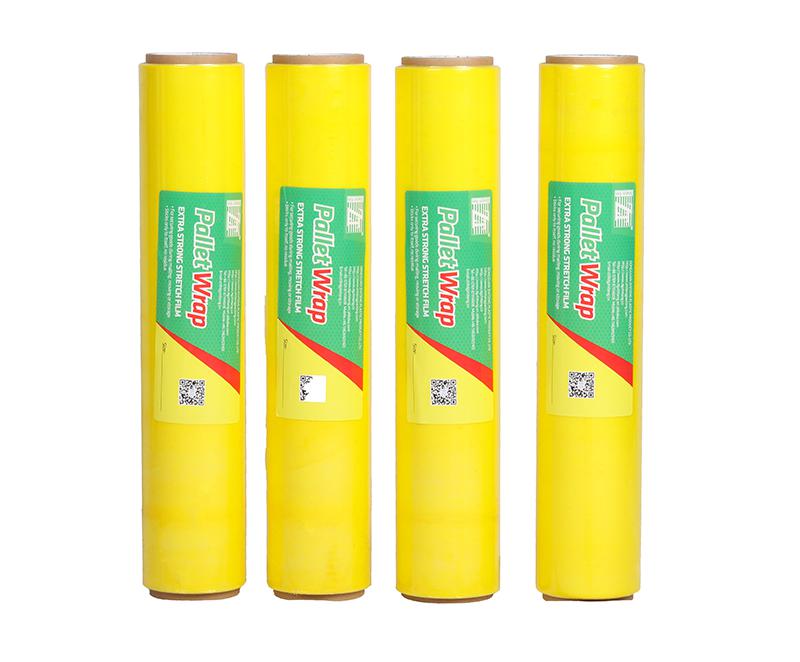
Table of Contents
- How Does Visual Coding Reduce Loading Errors?
- What Makes Colored Film More Effective Than Labels Alone?
- How Does It Improve Cross-Docking Efficiency?
- Can Colored Film Enhance Quality Control During Transit?
1. How Does Visual Coding Reduce Loading Errors?
In a traditional warehouse, workers must stop and physically inspect small labels on every pallet to determine its destination. This manual process is slow and highly susceptible to human error, especially during long shifts.
Visual coding reduces loading errors by replacing text-heavy labels with distinct colors assigned to specific routes or carriers. This simplifies the verification process, allowing supervisors to spot mismatched pallets instantly before they are loaded, significantly increasing shipping accuracy and speed across the entire logistics chain.
1.1 Cognitive Speed and Error Preventi
The human brain processes visual information, specifically color, much faster than it deciphers text or numbers. By wrapping pallets in specific colors—such as blue for East Coast and red for West Coast—you reduce the cognitive load on your dock workers. Theoretically, this aligns with "Poka-Yoke" (error-proofing) principles in lean manufacturing. Practically, it means a loader can identify a mistake from 30 feet away, whereas a label error might not be noticed until the pallet is already on the truck.
Dongguan Zhiteng Plastic Products Co., Ltd. specializes in producing high-contrast colored films that remain vibrant even under harsh warehouse lighting. This ensures that the visual cue is unmistakable. From a design trade-off perspective, while colored film costs slightly more than clear film, the "return on investment" is realized almost immediately through the elimination of a single mis-shipment.
1.2 Practical Application in Multi-Carrier Hubs
Facilities that manage multiple shipping partners (e.g., FedEx, UPS, DHL) benefit the most from this system. Assigning a unique color to each carrier ensures that pallets are never loaded onto the wrong vehicle.
- Example 1: Carrier Matching: A warehouse uses yellow film for all DHL shipments and green for FedEx. A green pallet sitting in the yellow loading lane is an immediate red flag for the supervisor.
- Example 2: Priority Shipping: Using bright orange film for "Overnight Express" items ensures these pallets are prioritized by loaders and never left behind in the staging area.
2. What Makes Colored Film More Effective Than Labels Alone?
Labels are the standard for tracking, but they have significant physical limitations. They can peel off, get covered by other pallets, or be printed with low ink, making them difficult to read from a forklift.
Colored film is more effective than labels because it offers 360-degree visibility, whereas labels are small and easily obscured. Even if a label falls off or is hidden, the pallet’s color remains a permanent, highly visible indicator of its intended destination throughout the logistics process.
2.1 360-Degree Visibility and Durability
A label is typically placed on one or two sides of a pallet. If the pallet is rotated incorrectly in the staging lane, the loader cannot see the destination without getting off the forklift. Colored stretch film provides a uniform color around the entire circumference of the load. This 360-degree visibility ensures that the pallet's status is known regardless of its orientation.
Furthermore, Zhiteng’s colored films are "moisture-proof and dust-proof," protecting the visual indicator from environmental damage. In outdoor staging areas or damp shipping containers, paper labels often degrade or lose adhesion. The stretch film, however, maintains its integrity and color, ensuring the shipment remains identifiable until it reaches the final customer. This multi-angle analysis highlights that film provides a structural and informational benefit simultaneously.
2.2 Reducing "Search Time" in High-Density Storage
In large-scale distribution centers, workers spend a significant portion of their shift simply searching for the correct pallets.
- Example 1: High-Rack Identification: In a 40-foot high racking system, reading a label on the top tier is impossible. A bright red wrap, however, is clearly visible from the floor.
- Example 2: Staging Lane Organization: When 50 pallets are lined up for a single truck, using a specific color for that "wave" of shipments allows the loader to grab them in sequence without checking every individual barcode.
Comparison of Identification Methods:
- Labels: Require close-range inspection; prone to falling off; limited visibility.
- Colored Film: Visible from a distance; 360-degree coverage; highly durable.
- RFID Tags: Highly accurate but expensive to implement and require specialized hardware.
- Colored Film + Labels: The "Gold Standard" for zero-error logistics.
3. How Does It Improve Cross-Docking Efficiency?
Cross-docking relies on the rapid movement of goods from receiving directly to outbound shipping with minimal storage time. In this high-speed environment, any delay in identification creates a bottleneck.
Colored stretch film improves cross-docking efficiency by enabling rapid "touchless" sorting. Workers can move pallets directly from receiving to the correct outbound lane based on color alone, minimizing dwell time, reducing labor costs, and accelerating the overall throughput of the distribution center.
3.1 Minimizing Dwell Time and Labor Costs
The primary goal of cross-docking is to reduce the time a product spends in the warehouse. By using colored film, you eliminate the need for workers to scan every pallet at every transition point. Receiving teams can wrap incoming goods in the color of their outbound destination immediately. This allows forklift operators to move goods with "touchless" precision.
From a theoretical basis, this reduces "waste" in the lean supply chain. Practically, it allows a smaller team to handle a larger volume of goods. Zhiteng’s "machine stretch film" can be integrated into automated wrapping lines, ensuring that pallets are color-coded as they are palletized, further streamlining the transition from production to the shipping dock. This design trade-off—investing in colored film—is offset by the massive reduction in labor hours spent on manual sorting.
3.2 Real-World Throughput Examples
Efficiency gains are most visible in industries with high turnover, such as grocery or consumer electronics.
- Example 1: Grocery Distribution: Perishable goods are wrapped in green for immediate dispatch to local stores, while non-perishables are wrapped in clear for short-term storage.
- Example 2: E-commerce Returns: Returned items are wrapped in black (opaque) to hide contents and moved to a specific "processing" zone, keeping them separate from new outbound inventory.
Efficiency Metrics to Track:
- Pallets Per Hour (PPH): Typically increases by 15-20% with color coding.
- Loading Error Rate: Often drops to near zero.
- Forklift Fuel/Battery Life: Improved due to less "searching" and more direct travel.
4. Can Colored Film Enhance Quality Control During Transit?
Shipment mix-ups aren't just about the wrong destination; they can also involve shipping the wrong quality of product. Sending "on-hold" or "rejected" items to a customer is a catastrophic error.
Colored stretch film enhances quality control by providing a physical and visual barrier that prevents non-conforming goods from being shipped. By using a strict color standard—such as red for rejected items—warehouses ensure that these pallets are never accidentally loaded onto an outbound truck.
4.1 Preventing the Shipment of Non-Conforming Goods
In an ISO 9001 certified environment, like the one maintained by Dongguan Zhiteng Plastic Products Co., Ltd., the segregation of materials is a requirement. Using red stretch film for "Rejected" parts and yellow for "Quarantined" parts creates a fail-safe system. Even if a worker tries to load a red pallet, the supervisor or the truck driver will immediately notice the "stop" signal that the color red provides.
This multi-angle analysis shows that colored film serves as a "visual control" in the workplace. It doesn't just help you ship faster; it helps you ship better. The practical impact is a reduction in customer complaints and a stronger reputation for quality. For global buyers, Zhiteng offers OEM services to customize these colors to match existing internal QC standards.
4.2 Practical QC Testing and Implementation
To implement this effectively, a company must define a clear "Color Key" that is posted at every dock and packing station.
- Example 1: Pharmaceutical Safety: A company uses white film for standard meds and purple for controlled substances, ensuring they are loaded into high-security vehicles.
- Example 2: Fragile Goods: Bright pink film is used for ultra-fragile glass shipments, signaling to loaders that these pallets must be placed on the top tier and handled with extreme care.
Standardized QC Color Chart:
- Red: Rejected / Do Not Ship.
- Yellow: Pending Inspection / Quarantine.
- Green: Approved / Ready for Dispatch.
- Black: High-Value / Security Required.
- White: Clean Room / Medical Grade.
Conclusion
Preventing shipment mix-ups is essential for maintaining a profitable and professional logistics operation. Colored stretch film offers a low-cost, high-impact solution that addresses the root causes of loading errors: poor visibility, manual verification, and human fatigue. By implementing a color-coded system, you empower your team to work faster and more accurately, while providing an extra layer of security and quality control. Partnering with a professional manufacturer like Dongguan Zhiteng Plastic Products Co., Ltd. ensures you have access to the high-quality, durable colored films needed to transform your shipping dock into a model of efficiency.
Recommended Products
Ranked in the same article
- how to use the stretch film technology to r
- How can we get detailed price list?
- Gauge to Micron and Millimetre Conversion G
- Five common quality problems of PE protecti
- Plastic film degradation
- How to guarantee punctual shipment for our
- What is the difference between stretch film
- Testing the permeability of stretch film
- Stretch film temperature requirements
- 2025 Guangzhou Packaging Expo Opens, Zhiten
- Electrical wire film VS electrostatic film
Latest news articles
- Unraveling the Science: What Factors Influe
- SWOP - SHANGHAI WORLD OF PACKAGING 2019
- The Ultimate Guide to Hand Stretch Film: Ev
- What Role Does Material Science Play in Enh
- What effects can different colours of Color
- Why does stretch film wrinkle when it is us
- Our services
- What is Bundling Stretch Film? Your Packagi
- Bundling Stretch Film: The Ultimate Guide f
- how to use the stretch film technology to r
- How to identify high quality flexible stret